500 North Korean ICBMs for Iran? The Wildest Missile Claim of the War Could Change Everything — If It's True
A sensational report says Iran has received 500 intercontinental ballistic missiles from North Korea. If true, it would redraw the military map overnight. If false, it still reveals how frightened the information environment has become.
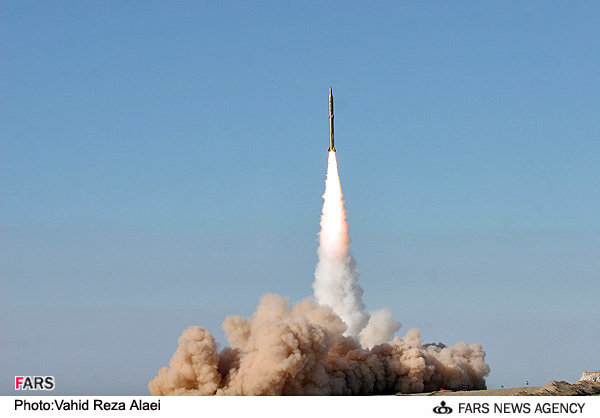
Every war eventually produces one claim so extreme that it forces a choice between fascination and discipline.
This week's version is the report, attributed in online circulation to Korean media, that Iran has acquired 500 intercontinental ballistic missiles from North Korea, with some said to have arrived only days ago and to carry ranges of roughly 15,000 kilometers. The allegation is extraordinary. Not "big if true" extraordinary. System-shattering extraordinary.
If such a transfer had actually taken place at the scale being claimed, it would not be just another battlefield development. It would be one of the most consequential illicit missile movements in modern history. It would imply not only deep strategic cooperation between Tehran and Pyongyang, but a dramatic failure of intelligence visibility by the United States and its partners. It would also mean that the Iran war is no longer simply a regional confrontation with global economic consequences. It would become a direct long-range strategic crisis reaching far beyond the Middle East.
And yet, for all the drama of the headline, the public evidence available so far remains painfully thin.
The claim is spreading rapidly on social media, but the broader public reporting landscape remains much more cautious. Current high-quality reporting about North Korea is focused on its own missile and engine development, not on any confirmed shipment of 500 ICBMs to Iran. The Associated Press, for example, recently reported on North Korea's testing of an upgraded solid-fuel engine for weapons potentially capable of reaching the U.S. mainland, while also noting that outside experts question some of Pyongyang's claims and warn that past North Korean weapons announcements have often been exaggerated or deceptive.
That matters because it shows the context is plausible in one limited sense: North Korea is indeed working on systems associated with long-range strike capability. But plausible context is not proof of transfer.
There is also historical background that makes the story feel believable. For years, analysts and sanctions monitors have suspected some level of missile-related cooperation between North Korea and Iran. Reuters reported years ago on U.N. findings suggesting regular exchanges of missile technology, and more recent Reuters reporting has noted longstanding suspicions of cooperation on long-range missile projects and transfer of parts. So the idea of technical collaboration is not fringe fantasy pulled from nowhere.
But there is a giant leap between "these countries may cooperate on missile technology" and "Iran has received 500 ICBMs capable of 15,000 kilometers."
That leap is exactly where skepticism should begin.
A transfer of that scale would raise obvious logistical questions. Where were the missiles stored? How were they transported? How were they integrated? What launch systems, crews, command chains, fuel or canister requirements, maintenance structures and concealment measures were involved? Even if some systems were disassembled, hidden or pre-positioned over time, 500 strategic-range missiles is not a discreet side deal. It is a major industrial and military undertaking.
There is another clue in how the claim is being framed. Much of the online commentary tries to strengthen credibility indirectly by pointing to recent U.S. aircraft losses and Iran's claims of "next-generation" defensive capability. But battlefield success in shooting at aircraft does not itself prove possession of a huge imported ICBM stockpile. Those are separate analytical questions. One can help the story feel emotionally credible without actually proving the harder strategic allegation.
So why does the claim matter, even if still unverified?
Because it points to a growing fear that the war is exposing hidden layers of Iran's military resilience. After weeks of strikes, repeated claims of Iranian degradation, and constant insistence that Tehran's strategic reach is collapsing, stories like this gain traction precisely when events on the ground suggest the picture may be less tidy. If Iran can still contest airspace, still threaten shipping, still repair bunkers and still shock U.S. planners, then audiences become more receptive to the idea that an even larger unseen capability may exist.
There is also a geopolitical subtext here. A story about 500 North Korean ICBMs does not only implicate Pyongyang. It pulls China, Russia, sanctions enforcement, maritime surveillance, proliferation architecture and allied intelligence credibility into the same frame. Even an unconfirmed rumor of that size can alter market psychology and alliance conversations because it expands the imaginable scale of the threat.
The most sober conclusion, then, is also the least cinematic. The historical record supports suspicion of missile cooperation between Iran and North Korea. North Korea is actively advancing long-range missile technology. But the specific public claim that Iran has now acquired 500 ICBMs with 15,000-km reach remains far beyond what has been firmly demonstrated in accessible reporting.
Still, readers should not dismiss the story too casually either. Not because the 500 number is proven, but because rumor often travels along real fault lines. The relationship between Tehran and Pyongyang has long worried proliferation experts for a reason.
So the question is not only whether this specific claim is true.
It is also why, after years of sanctions, surveillance and strategic pressure, the world is so ready to believe that a transfer on this scale might be possible.