$700 Billion Gone in a Day: Why Chinese Stocks Just Got Hammered After Trump's 48-Hour Iran Ultimatum—and Why Beijing's Problem Is Bigger Than a Bad Trading Session
The selloff in Chinese equities was not just about panic headlines. It reflected oil shock, inflation fear, external demand risk and the possibility that a Middle East war can weaken China even when Washington looks more directly exposed.
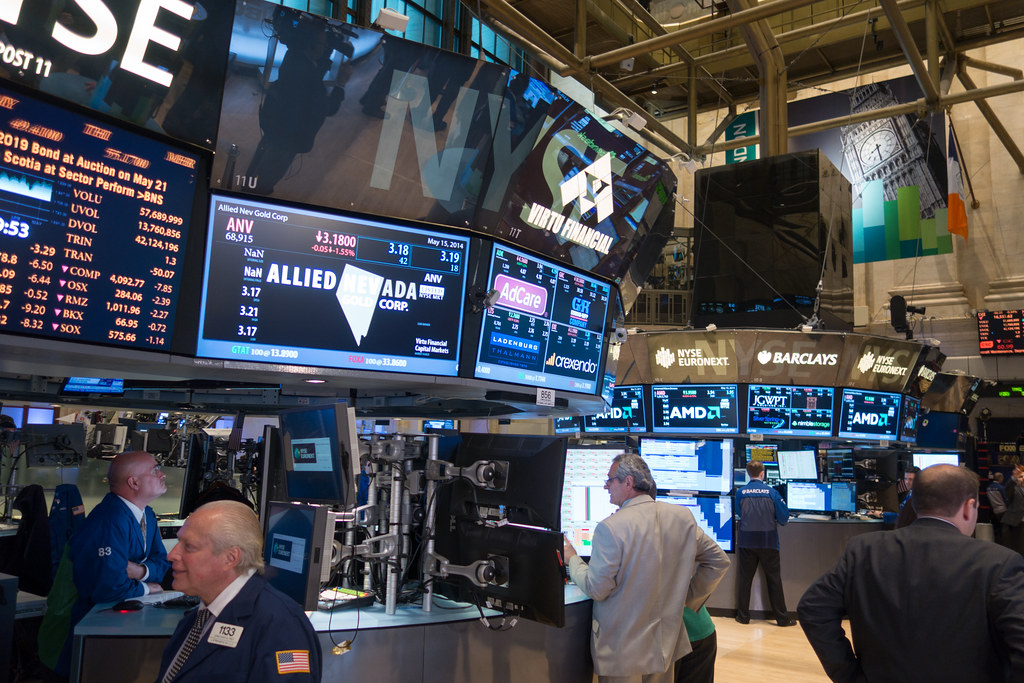
The easy version of the story is that China lost hundreds of billions because Donald Trump gave Iran a 48-hour ultimatum and markets panicked. The harder version is that the selloff tells us something more revealing: Beijing can profit from selective disruption in the Gulf, but it cannot isolate itself from a full-scale energy shock. Reuters reported that Asian markets slid sharply after Trump threatened to obliterate Iranian power plants if Tehran did not fully reopen the Strait of Hormuz, while Iran in turn threatened Gulf energy and infrastructure targets. China’s CSI300 fell, Hong Kong sank harder, Japan dropped even more sharply, and oil remained near levels that imply a global inflation problem, not just a regional war problem.
The crude viral take says roughly 2.7 trillion yuan, or more than $700 billion, was wiped from Chinese markets in a day. Whether one uses that exact number or a slightly lower one, the broader point holds: this was not a trivial wobble. Investors were repricing a world in which energy is more expensive, shipping is less secure, global growth is softer and central banks are less likely to cut rates soon. That combination is poison for risk appetite. China, despite its manufacturing scale and strategic ambitions, still lives inside that world rather than above it.
This is where many geopolitical takes go wrong. They assume that because China has bought discounted Iranian crude, expanded non-dollar channels and benefited in relative terms from Western distraction, a worsening Middle East conflict must therefore be net-positive for Beijing. Sometimes that may be true at the margin. But margins are not systems. China imports vast amounts of energy. Its exporters sell into regions that are highly exposed to oil-price shock. Its domestic economy remains sensitive to confidence, property wealth, and external demand. A prolonged war in the Gulf is not only an American problem with Chinese upside. It is also an inflationary, trade-distorting and growth-sapping event that can boomerang into Chinese earnings and sentiment quickly.
Reuters noted that the latest market move reflected exactly that mix: surging oil prices, inflation fears and higher bond yields, all of which undercut equity valuations. When oil rises far enough, it stops being merely a commodity story and becomes an economy-wide tax. Airlines, chemicals, transport, plastics, logistics and industrial inputs all reprice. Imported inflation seeps through. Consumers pull back. Export customers in Europe and Asia weaken. For a Chinese market already dealing with a long effort to restore confidence, that is a difficult overlay.
Still, the bears and the bulls can both find material in this selloff. The bearish case is obvious. Beijing faces a nasty triangle: weaker external demand, costlier imported energy and a world becoming more strategically hostile at the same time. If the U.S. continues militarizing the Hormuz question while also pressuring allies to line up behind it, China could face both market losses and geopolitical constraint. The bullish counterargument is more subtle. If Washington becomes more consumed by Gulf escalation, Beijing may gain relative room in Asia. If higher oil hurts everyone, China can still try to leverage state capacity, controlled finance and selective energy access better than many democracies can. In other words, China may lose on the screen before it wins in the structure.
That is why one trading day should not be mythologized as final proof of either collapse or resilience. It is better understood as a stress test. How does Chinese capital behave when a Middle East war ceases to be a remote headline and becomes a direct inflation risk? The answer, for now, is: badly, but not irrationally. Investors sold because the external picture worsened. They also sold because uncertainty expanded faster than policy reassurance. If oil keeps rising and bond yields stay elevated, more pain may follow. If energy flows partially stabilize and policymakers cushion the blow, some of the move may reverse. Neither outcome erases the deeper lesson: China is more entangled in global conflict spillovers than triumphalist rhetoric likes to admit.
There is also a political-information angle worth noting. The same online spaces that celebrated China’s quiet gains from the war are now scrambling to explain why Chinese equities bled so visibly. Some blame only Trump. Some blame only the market. Some say this is a buying opportunity before Beijing emerges stronger. Perhaps. But markets are often most revealing when they disappoint ideology. If China were truly insulated, the selloff would have been far milder. If the U.S. were uniquely doomed, global money would not still be treating the dollar as a refuge during the crisis. Both realities can be uncomfortable for people who prefer simple civilizational scorecards.
In practical terms, what happened today was less about one ultimatum than about a chain reaction. Trump threatened Iran’s power grid. Iran threatened the Gulf’s infrastructure. Oil stayed high. Rate-cut hopes shrank. Risk assets fell. China got hit because China lives in the same macro atmosphere as everyone else, even if it wants to redesign that atmosphere over time. The war is revealing something important: global fragmentation does not eliminate interdependence. It just makes its costs more violent and less evenly distributed.
So was this a Chinese-specific crisis? Not really. Was it a warning that China’s position is weaker than its best propaganda suggests? In some respects, yes. But the most honest conclusion is more nuanced. China is neither immune nor helpless. It is a giant economy with strategic tools, but also a giant economy with giant exposures. When Hormuz starts dictating inflation, nobody with real skin in global trade gets a free pass. Not Washington. Not Brussels. And certainly not Beijing. What the market erased in one day was not only value. It was the fantasy that one side can watch a Gulf war from afar and collect only advantages.