Did Delcy Insult Trump With That Hand Sign?
Delcy Rodríguez posed beside Trump with two fingers raised and her palm turned inward. British viewers saw an insult; Venezuelan context points to ambiguity.
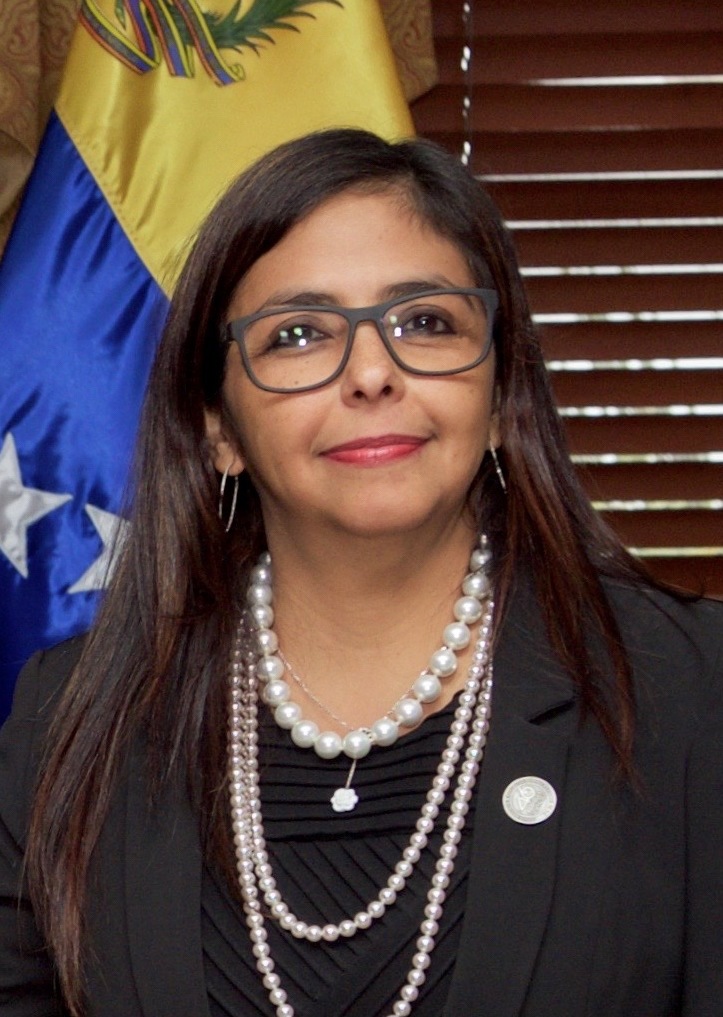
A photograph from Donald Trump’s first meeting with Venezuelan interim President Delcy Rodríguez has created a miniature diplomatic mystery. Rodríguez smiles while holding up two fingers with her palm apparently facing inward. Trump gives a thumbs-up.
British viewers immediately recognized a rude gesture often described as the two-finger equivalent of the middle finger. Was Rodríguez insulting Trump in his own country while pretending to celebrate the meeting?
The image is authentic. The interpretation is not established.
Gestures do not have universal meanings. In Britain, Ireland, Australia and some other Commonwealth cultures, a palm-inward V can be insulting. A palm-out V is more commonly read as victory or peace. Camera angles can also make palm orientation difficult to judge.
In Venezuela and much of Latin America, the British insult is not an automatic cultural reading. Rodríguez may have intended victory, peace, the number two or an informal pose. A still photograph cannot show whether her wrist was moving or how long the gesture lasted.
Context weighs against a deliberate insult. Rodríguez published the image herself, described the meeting as historic and thanked Trump for American support following Venezuela’s June earthquake. A hidden hostile signal would undermine the diplomatic opening she was publicly promoting.
That does not make symbolic play impossible. Politicians sometimes use ambiguity to speak differently to domestic and foreign audiences. Rodríguez’s supporters may enjoy an interpretation in which she retains defiance while negotiating with the government that removed Nicolás Maduro.
The larger meeting matters more than the hand. Trump’s administration has backed Rodríguez’s interim leadership and signed an energy arrangement giving American companies a major role in Venezuela’s oil industry. Critics call the relationship coercive; supporters say it offers investment and a route out of isolation.
The gesture story attracts attention because it reverses the visible power imbalance. A leader often portrayed as dependent on Washington suddenly appears to be insulting the American president. That emotional satisfaction can make the most dramatic interpretation spread fastest.
Why gesture theories spread so quickly
Body-language stories offer the illusion of access to a leader’s hidden intention. Instead of reading policy documents, audiences can decode a hand, expression or posture and feel they have discovered what diplomats concealed.
The method is unreliable because gestures are culturally variable and photographs freeze transitions. A person moving from a wave to a victory sign can be captured in a shape neither intended. Lens reversal and mirrored reposts can even change which hand or orientation viewers perceive.
Context should update the probability of competing interpretations. Rodríguez released the photograph through official channels, stood smiling and praised the meeting. Those facts do not make a private insult impossible, but they make it less likely than an ordinary victory or peace gesture.
Political polarization rewards the insult reading. Opponents of Trump can portray him as unknowingly mocked; opponents of Rodríguez can portray her as duplicitous. Both narratives generate engagement without requiring evidence.
The broader U.S.-Venezuela relationship contains genuine contradictions worth examining. Rodríguez must cooperate with the government that removed Maduro while preserving nationalist legitimacy. Trump wants access to oil and regional stability while claiming a decisive political victory. Each side needs photographs that tell different domestic stories.
Ambiguity can therefore be politically useful even when not planned. Venezuelan supporters may read defiance, American officials may read celebration, and both governments continue negotiating.
News coverage should explain the British meaning because viewers are asking about it, then state clearly that cultural translation is not mind-reading. A compelling possibility remains only a possibility.
If Rodríguez wanted to insult Trump, publishing the image would turn subtle signaling into an avoidable diplomatic risk. If she wanted to claim victory, the pose fits her political need to show that Venezuela negotiated with Washington rather than surrendered to it. The latter explanation requires fewer hidden assumptions, although only Rodríguez can settle the question of intention.
The photograph is a useful reminder that visual “evidence” can be genuine while the conclusion attached to it is false or unknowable. Verification is not only checking whether an image was manipulated; it is checking whether the image proves what the caption claims.
What to watch next
Does Rodríguez or her office explain the sign? Do Venezuelan audiences recognize a local political meaning? Until then, the honest conclusion is ambiguity. The meeting was historic; the supposed insult is a culturally imported interpretation of one frame.