Did the Fattah-1 Really Light a Second Motor and Beat 12 Interceptors? What the Video Suggests — and What It Doesn't
A viral video is being used to argue that Iran's Fattah-1 activated a second motor in terminal phase and outmaneuvered a dozen interceptors. The engineering idea is not fantasy. The certainty attached to the video is another matter.
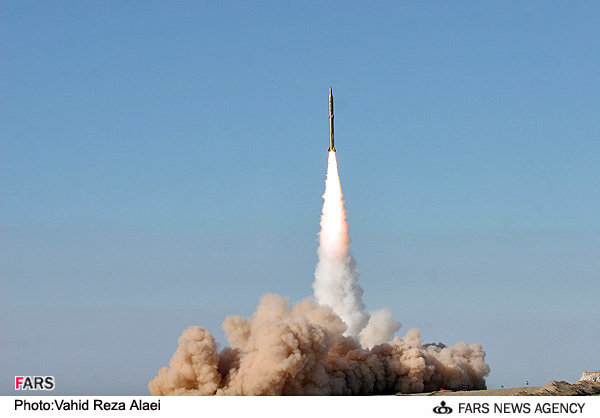
Did the Fattah-1 Really Light a Second Motor and Beat 12 Interceptors? What the Video Suggests — and What It Doesn't
The Fattah-1 has been one of the most mythologized missiles of this war for a reason. Iran presents it as a "hypersonic" breakthrough capable of penetrating all defense shields. Western analysts tend to use more careful language. Reuters, citing defense experts, has noted that the missile is better understood not as a classic hypersonic glide vehicle but as a ballistic missile whose warhead stage behaves like a maneuverable re-entry vehicle, with aerodynamic controls and a small motor that can help it maneuver in terminal flight.
That distinction matters.
Because now a new video is circulating with a very specific claim: that the Fattah-1 visibly activated its secondary motor in the final phase of flight and, in doing so, defeated twelve interceptors. It is the sort of clip that instantly upgrades a missile from technical curiosity to legend.
And yet the gap between what the system may be capable of in theory and what one video can prove in public is larger than the viral commentary admits.
Let us start with what is plausible. Analysts have for some time described the Fattah family as incorporating a maneuverable re-entry concept. The basic idea is straightforward. A conventional ballistic missile follows a largely predictable trajectory once the boost phase is complete. If, instead, the warhead can make terminal corrections — especially using a small propulsion source and thrust-vector or aerodynamic control — it becomes harder for defenders to model its final path. That does not make interception impossible. It does compress reaction time and complicate fire-control logic.
In that sense, the core engineering concept behind the viral explanation is not ridiculous. A small terminal propulsion element can help restore speed, sustain maneuver authority, and preserve some energy during the violent atmospheric environment of re-entry. That is exactly why maneuverable re-entry vehicles matter.
But the second claim — "defeated 12 interceptors" — requires a different level of evidence.
A bright flare in a video, or a sudden change in trajectory, can be consistent with motor activity. It can also be consistent with imagery artifacts, angle distortions, interceptor interactions, fragmentation, or incomplete visual context. Public clips rarely come with synchronized radar tracks, missile telemetry, engagement-zone mapping, interceptor type breakdowns or frame-by-frame authenticated geolocation. Without that, certainty is theater.
There is also an old wartime habit at work here: treating the number of visible defensive launches as proof that the attacker "beat" all of them. In reality, multiple interceptors may be fired at one object deliberately. Some may be decoys, some may be layered attempts, some may be precautionary, some may lose track, and some may never have been intended to score alone. Counting launches is not the same as proving technical defeat.
This does not mean the defenders performed well. It does mean the video alone cannot answer the most interesting questions.
For example: did the warhead maneuver late enough to break predictive tracking? Did the motor burn longer than expected or only flash briefly? Was the apparent terminal burst a designed re-acceleration or simply a visible artifact of stage behavior? Did the object that struck actually remain the same tracked body throughout the terminal sequence? These are engineering and sensor questions, not slogan questions.
There is another reason the claim matters. If Iran can reliably demonstrate a re-entry package that preserves velocity while maneuvering sharply, then the economics of defense worsen even more. Every additional layer of maneuver uncertainty pressures defenders to shoot more, earlier, and with less confidence. That is how a missile can create strategic value even if it carries a smaller payload than a more traditional design.
But again, the strategic implication should not be confused with proof from one clip.
A careful reader should walk away with three layered conclusions.
First: the Fattah-1's design philosophy really does appear oriented toward terminal maneuver and missile-defense evasion. That is not fantasy.
Second: the popular label "hypersonic" is still more ambiguous than the propaganda suggests. The missile may move very fast and maneuver in terminal phase without matching the cleaner public image people attach to advanced boost-glide systems.
Third: the specific viral boast that one demonstrated shot visibly activated a second motor and defeated twelve interceptors remains, at present, a claim, not a proven quantitative result.
And perhaps that is the most revealing part of all. The missile's power now lies not only in what it physically does, but in what defenders must assume it might be able to do next time.
In modern missile war, doubt is a weapon too.