Eritrean Troops Cross Into Ethiopia
Multiple reports place Eritrean forces inside northern Ethiopia as Addis Ababa demands all foreign troops withdraw and the US warns of possible long-range attacks.
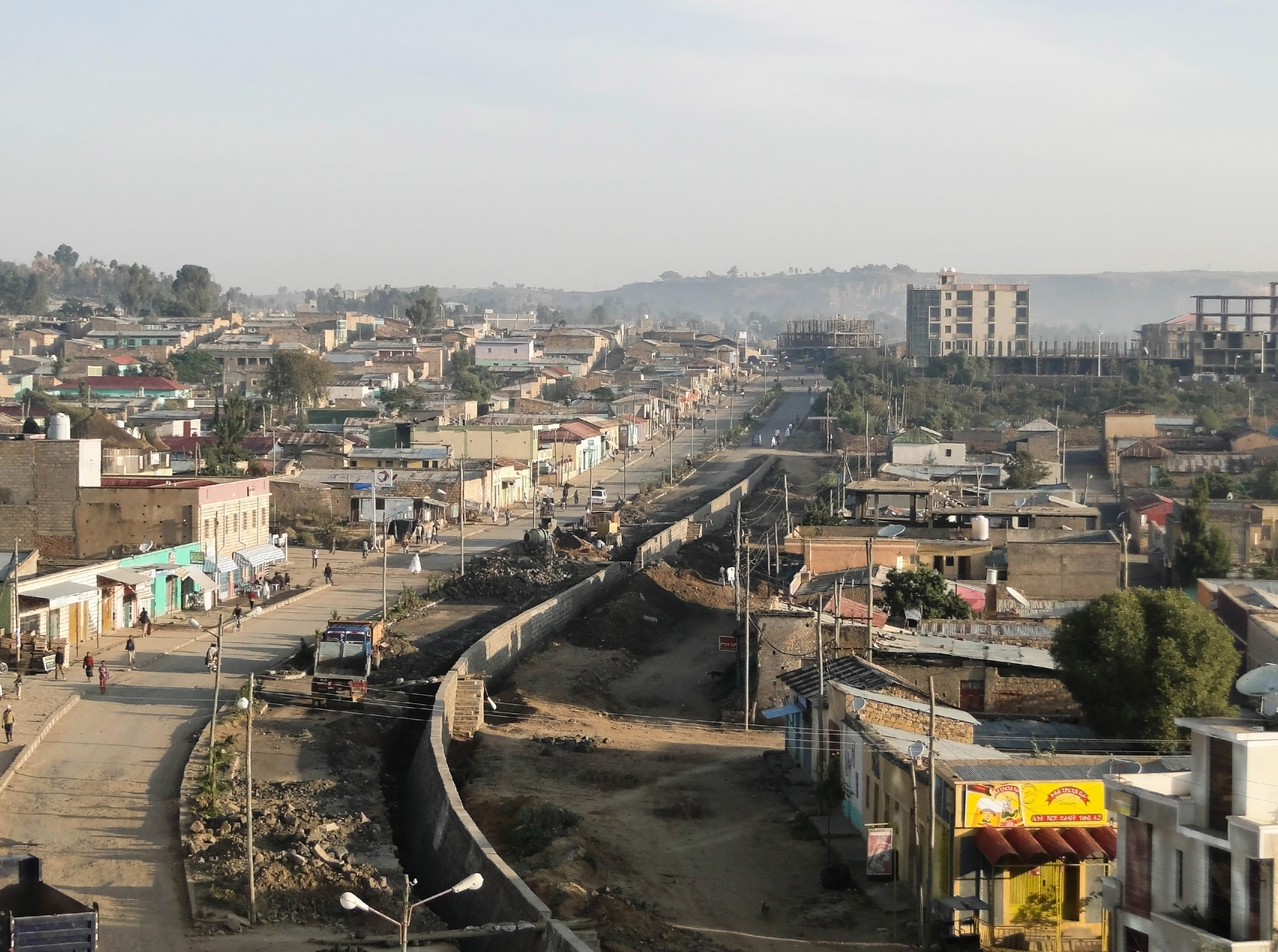
Eritrean troops have crossed into northern Ethiopia, according to reporting by AFP and Deutsche Welle citing local sources, opening a dangerous new phase in a conflict already spreading across Tigray, Afar and Amhara. Ethiopia’s government has now publicly demanded the immediate withdrawal of all foreign military forces from its territory.
The most significant reports place Eritrean personnel around Adigrat, a Tigray Defense Forces stronghold near the border. Witness accounts and regional sources support the presence of Eritrean units, but the number of troops, their exact chain of command and whether they are conducting combat operations remain unclear.
Addis Ababa’s statement was unusually direct: “In particular, Eritrean forces operating in Tigray must leave Ethiopian territory without delay.” That language moves the issue beyond anonymous battlefield claims. It does not prove every reported deployment, but it confirms that Ethiopia officially regards Eritrean military presence as a current violation of sovereignty.
Eritrea has rejected broader Ethiopian accusations and portrays them as a pretext. Relations between the former partners have deteriorated sharply. Ethiopia recently closed its embassy in Asmara and expelled Eritrean diplomats; Eritrea responded by severing diplomatic ties. Disputes over Tigray, Red Sea access and alleged support for armed groups have replaced the alliance that existed during the 2020–2022 war.
The historical reversal is important. Eritrean forces fought alongside Ethiopia’s federal army against the Tigray People’s Liberation Front during the last war and were accused of grave abuses. Eritrea was not a party to the 2022 Pretoria peace agreement. As Addis Ababa and Tigrayan forces again confront one another, Eritrea may see threats and opportunities that differ from Ethiopia’s current strategy.
The United States Embassy has warned of possible long-range attacks directed at Ethiopian military installations during October. It advised US citizens not to travel to Amhara, Tigray or Afar and told those already there to leave if safe or shelter in place. A security alert is a risk assessment, not proof that a specific strike is imminent, but it reflects the expansion of drones, missiles or long-range systems into the conflict.
Adigrat matters because it sits close to the Eritrean frontier and on routes connecting eastern Tigray to the wider region. Control there affects resupply, civilian movement and the ability of any force to project deeper into Tigray. An Eritrean presence could force Tigrayan commanders to divide forces while complicating Ethiopia’s own offensive.
The conflict also threatens civilians who have barely recovered from the previous war. Communications restrictions, damaged health systems and fuel shortages make independent casualty reporting difficult. Renewed fighting can displace families a second or third time, while the involvement of foreign troops creates additional command and accountability problems.
Regional actors have incentives to avoid an interstate war, but diplomacy is weakened. Ethiopia and Eritrea no longer maintain normal relations. The African Union faces competing member-state claims. Egypt, Sudan and Somalia have their own disputes and alliances involving Addis Ababa or Asmara. What begins as a border deployment can become a regional contest.
Readers should be cautious with maps claiming precise territorial control. Front lines in northern Ethiopia can shift quickly, and video often circulates days later with incorrect labels. Geolocation can establish where footage was recorded, but not always when, why or which authority holds surrounding territory.
The central confirmed fact is political as much as military: Ethiopia says Eritrean forces must leave, while credible reporting places those forces near Adigrat. That is enough to mark a serious escalation even before the full deployment is known.
Eritrea’s objectives may not be identical to those of any Ethiopian faction. Asmara has long regarded the TPLF as a security threat, but it also opposes Ethiopian pressure for sovereign access to the Red Sea. A deployment could therefore be aimed at Tigrayan forces, at deterring Addis Ababa, or at both. Until unit missions are clearer, assuming a single alliance structure would be premature.
A verified withdrawal mechanism would need more than a public demand. Ethiopia and Eritrea would have to agree on unit locations, timelines and monitoring, possibly through the African Union. Without verification, each side can accuse the other of covert redeployment while fighting continues through local partners.
What to watch next
Watch for verified Eritrean unit locations, fighting around Adigrat, new Ethiopian or Eritrean statements, African Union mediation and long-range attacks on military sites. The most dangerous scenario is simultaneous war between Ethiopian and Tigrayan forces and a separate Ethiopia-Eritrea confrontation.