Headscarves Thrown in a Mosque: Why a Protest at Istanbul's Fatih Mosque Is About More Than Al-Aqsa
A dramatic protest at Istanbul's Fatih Mosque, where women reportedly threw headscarves toward male worshippers over Al-Aqsa's closure, is being read in radically different ways. Was it a moral rebuke, a political performance, or a symptom of how regional war is reshaping public religious symbolism?
Not every protest uses a chant. Some use a symbol sharp enough to do the shouting on its own. The reported scene at Istanbul’s Fatih Mosque — women throwing headscarves toward male worshippers in protest over the extended closure of Al-Aqsa Mosque — is one of those moments. Even before anyone verifies each angle of the video or confirms every detail of the staging, the symbolism is obvious enough to explain why it traveled so quickly. The message was accusatory, theatrical, and culturally loaded: if men will not defend the dignity of the nation or of Jerusalem, then here is the garment associated with modesty, duty, and religious seriousness, thrown back at them as a rebuke.
That makes the episode bigger than a single mosque protest. It opens a window into how the Iran war, the closure of Al-Aqsa, and the regional crisis are being absorbed into older debates across the Muslim world: masculinity and piety, public shame and communal obligation, symbolism versus action, and the transformation of religious spaces into arenas of political moral pressure.
To understand why this resonated, one has to start with the context of Al-Aqsa itself. Reports from regional and international outlets in recent days have described restrictions and closures around the compound during one of the most emotionally charged periods of the Islamic calendar. For many Muslims, Al-Aqsa is not just another geopolitical talking point. It is a site where insult, exclusion, and sovereignty are felt in visceral, civilizational terms. When access is restricted, reactions are rarely confined to Jerusalem. They echo across capitals, sermons, campuses, and social media timelines from Rabat to Jakarta.
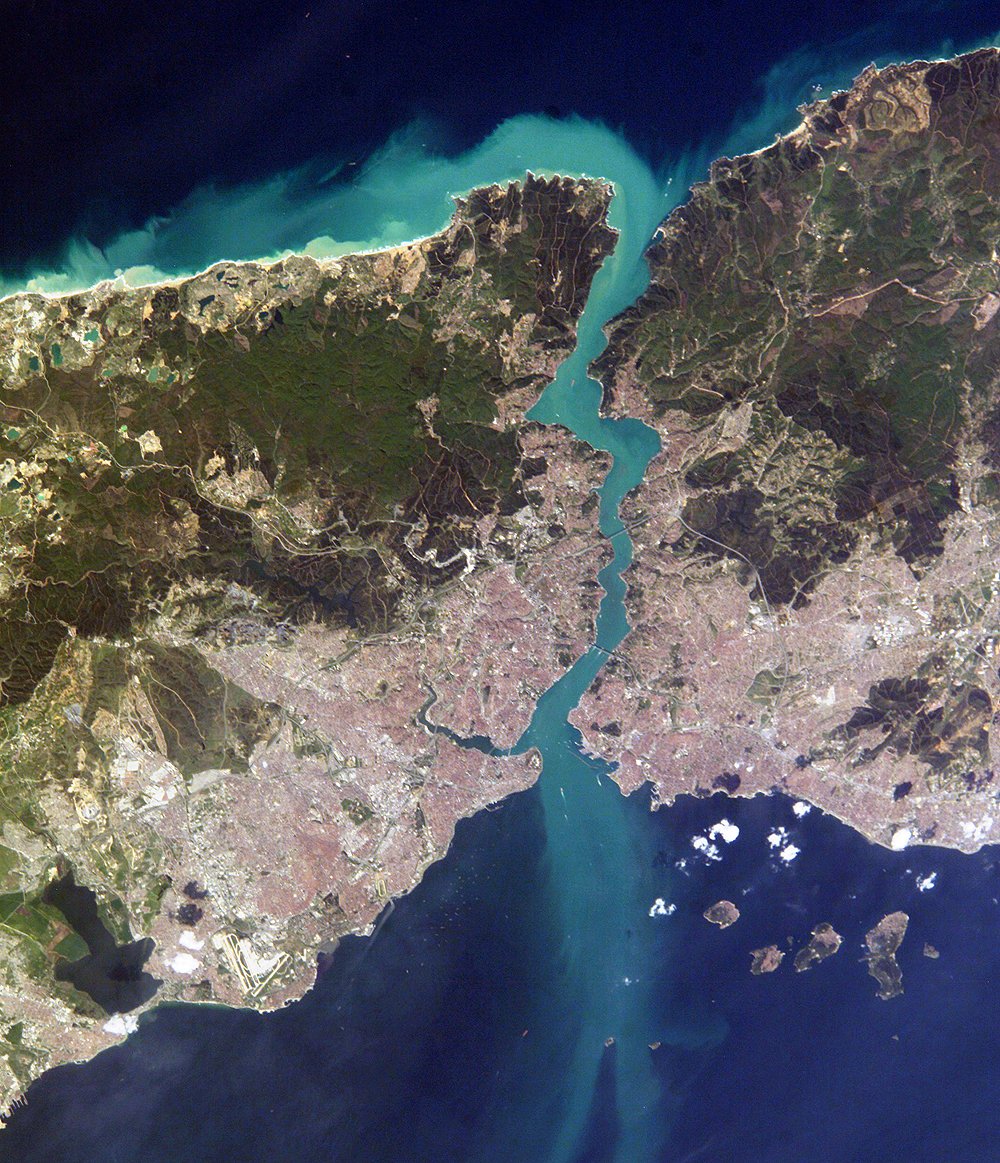
In Turkey, those echoes land inside a distinctive political culture. The country combines strong populist religious symbolism, deep historical memory of Ottoman guardianship over Islamic holy sites, and a modern public sphere in which symbolic gestures can go viral before institutions have even decided what to say about them. Fatih Mosque is therefore not an accidental stage. It sits in a city where piety, empire, nationalism, and opposition sentiment constantly brush against one another. A protest there is never just local.
But how should the headscarf act itself be interpreted? One reading is sympathetic: the women were expressing moral frustration at passivity. In that view, the act was not anti-male in some simple sense but anti-complacency. It was a way of saying that sermon, outrage, and online posts are not enough when one of Islam’s holiest places is closed and humiliated. Another reading is more skeptical: symbolic shaming inside a mosque may generate attention, but attention is not strategy. Critics of performative protest may argue that gestures like this substitute emotional release for meaningful organization.
A third reading is political in a narrower sense. Turkey’s public Islam has long involved contested performances of authenticity. In this frame, the act is not only about Al-Aqsa but about who gets to embody righteous anger and who gets accused of compromise. The target is not just “men” abstractly. It is every layer of male authority that presents itself as protective but is seen by some believers as verbally fierce and practically ineffective: state leaders, clerics, movement figures, even ordinary worshippers. The scarf becomes a prop in a much larger trial of credibility.
This is where outsiders can easily misread the event. To some Western audiences, the image may appear paradoxical: a headscarf, often discussed in Europe through debates about women’s freedom, is here being repurposed as a weapon of reproach. But that is precisely why the image traveled. Symbols never stay fixed. In one context they signal obedience, in another identity, in another defiance, and in another accusation. The headscarf in this scene was not merely clothing. It was rhetoric.
The gender layer is especially important. The act implied a critique of male custodianship: if the men in the room will not rise, perhaps the women must remind them what courage looks like. That message will inspire some and disturb others. Traditionalists may object to any act that publicly shames male worshippers in a sacred space. Feminist and activist readers may see the scene as proof that women are not only present in the politics of Palestine and Jerusalem but actively reshaping its imagery. Neither interpretation can be dismissed lightly.
There is, however, a danger in romanticizing the moment too quickly. Viral protest clips often compress complexity into a single moral image. Viewers far away may project their own fantasies of awakening, unity, or imminent action onto a scene whose immediate local meaning is more limited. It is possible for an act to be sincere and symbolically potent while still being strategically unclear. What exactly is being demanded? State action? Diplomatic escalation? Social mobilization? Boycott? Religious solidarity? The image is clearer than the program.
That ambiguity may be the point. Symbolic protest often works precisely because it leaves room for multiple audiences to insert their own conclusions. A worshipper may hear a call to courage. A government may hear a warning about public anger. An activist may see a recruitment image. A skeptic may see theatrical moralism. The image survives because it does not need everyone to agree on the same next step.
In the end, the Fatih Mosque scene matters because it reveals how the regional war is altering public moral language far beyond the battlefield. It shows how quickly a closure in Jerusalem can become a symbolic confrontation in Istanbul. It shows how sacred spaces remain deeply political even when no formal politician is speaking. And it shows how communities under pressure reach for old symbols to express new frustrations.
The question is not whether a few thrown headscarves will change policy. They will not. The question is why so many people immediately understood the gesture anyway. The answer is that the protest condensed a wider feeling spreading across the region: humiliation without agency, outrage without leverage, and a growing impatience with leaders and publics alike who speak of dignity while appearing unable to defend it.
That is why the clip matters. Not because it solved anything. But because it captured, in one dramatic and uncomfortable image, the emotional grammar of a region watching holy sites close, wars expand, and ordinary believers search for a language harsh enough to match their anger.