A Polish MEP Says Nord Stream Will Return
Polish MEP Grzegorz Braun told an AfD-linked gathering that Russian gas would again flow through Nord Stream—but political advocacy is not an operating plan.
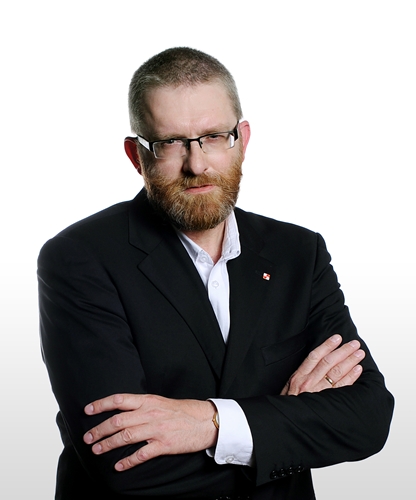
Polish member of the European Parliament Grzegorz Braun has declared that Nord Stream 1—and probably Nord Stream 2—“will be relaunched” and Russian gas will again flow west. The statement was real. The relaunch is not.
Braun spoke in Lubmin, Germany, where the pipelines reach land, during an event involving politicians from the Alternative for Germany. He argued that Poland should participate in, rather than boycott, energy projects connecting Germany and Russia.
Poland’s energy minister condemned the intervention as shameful. Warsaw has spent years opposing Nord Stream because it allowed Russian gas to bypass Poland and Ukraine, deprived them of transit leverage and increased Germany’s dependence on Moscow.
Braun’s claim matters politically because Europe faces high energy costs and renewed arguments over relations with Russia. It does not establish that governments, regulators, owners or insurers have agreed to restart the infrastructure.
Nord Stream 1 and 2 were damaged by explosions in September 2022. Investigations have focused on sabotage, and responsibility remains politically contested. Restarting any surviving section would require technical inspection, repair, environmental approval, sanctions clearance and commercial contracts.
Nord Stream 2 never entered commercial operation. Germany suspended its certification shortly before Russia’s full-scale invasion of Ukraine. Even an intact pipe cannot legally deliver gas without regulatory authorization.
Supporters of restoration argue that cheap pipeline gas powered German industry and that buying more expensive liquefied natural gas weakens European competitiveness. They say energy trade can resume without endorsing every Russian policy and could support a wider settlement.
Opponents answer that Moscow weaponized supply, used revenue to fund war and exploited European dependence. They argue that rebuilding the previous relationship would reward aggression and recreate the vulnerability Europe spent years reducing.
The economic comparison is more complicated than either slogan. Russian pipeline gas can be cheaper than LNG when infrastructure is functional, but repair, security, sanctions and political-risk premiums would change the calculation. Europe has also invested heavily in terminals, storage and alternative suppliers.
Poland’s own position has costs and interests. It developed the Świnoujście LNG terminal and Baltic Pipe connections while seeking a larger regional energy role. A revived Nord Stream would compete with infrastructure Poland supported and could again concentrate flows in Germany.
Braun’s appearance with AfD figures reflects a transnational political alignment skeptical of sanctions, military aid to Ukraine and the European mainstream. Yet “the AfD” is not the German government, and one Polish MEP cannot commit Warsaw.
There are possible intermediate outcomes. Europe might permit limited Russian energy purchases under a ceasefire, use existing Ukrainian transit routes or negotiate sanctions relief without repairing Nord Stream. A peace settlement could reopen debate even if the original pipelines never operate again.
The phrase “will be relaunched” is therefore best understood as political messaging. Braun wants inevitability to replace controversy: if restoration is coming anyway, Poland should demand a stake. Critics reject both the prediction and the premise.
Technical reality is another barrier. One line of Nord Stream 2 may have escaped the worst blast damage, but preservation status after years underwater is uncertain. Compressor stations, control systems and land connections require maintenance, while ownership structures face bankruptcy and sanctions questions. Gas would also need to enter the Russian network in available volumes and find European buyers willing to sign long contracts. Financing a repair for only temporary or politically reversible use may be unattractive. Even a government decision to normalize relations would not turn valves immediately; engineering surveys and commercial risk assessments would take months or years.
Security guarantees present the hardest problem. Russia would want confidence that repaired assets will not be seized or sanctioned again; European buyers would want confidence that flows will not be cut for political leverage. Private insurers cannot price guarantees that depend on the next election or battlefield crisis. A multilateral treaty could reduce that risk, but negotiating one would be harder than repairing steel pipe. Nord Stream’s technical survival therefore does not equal commercial bankability. Braun’s certainty skips the institutions that must absorb those risks. That matters.
What to watch next
Watch German certification policy, EU sanctions, repair assessments and any change after Ukraine negotiations. Until governments and operators produce permits and contracts, Nord Stream’s return remains an argument—not a scheduled energy project.