Did the Houthis Rupture Saudi Arabia’s Hormuz Bypass? Pumping Station 8 Fire Sends Oil Markets Into Panic
Ansarallah says it hit Pumping Station 8 on Saudi Arabia’s East–West pipeline, with smoke visible for hours. If flow capacity is materially reduced while Hormuz and Bab el-Mandeb are threatened, the kingdom’s export redundancy faces an extraordinary test.
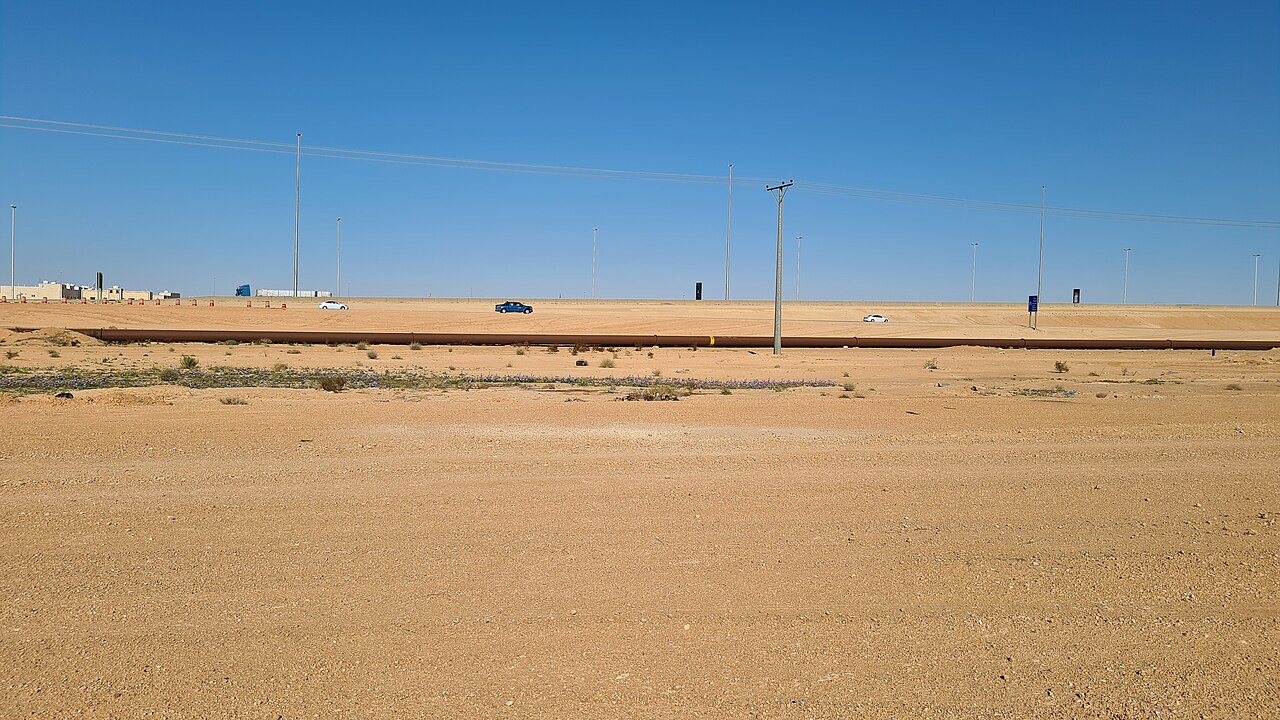
A fire reportedly burned for more than eight hours around Pumping Station 8 on Saudi Arabia's East–West oil pipeline after Ansarallah claimed a strike near Medina. The imagery is dramatic and crude prices are rising. The decisive question is not whether smoke existed, but whether the kingdom's principal Strait of Hormuz bypass has lost meaningful capacity.
The East–West Pipeline, often called Petroline, carries crude from Saudi Arabia's eastern producing region across the country to Yanbu on the Red Sea. It was designed to give Riyadh an export route that does not require tankers to pass through Hormuz. That redundancy has become exceptionally valuable during the U.S.–Iran war and collapse in Gulf shipping traffic.
Pumping stations maintain pressure across the long route. Damage to one can reduce capacity, halt a segment or force operators to use alternative configurations. Yet a large fire does not automatically mean the pipe itself ruptured. Fuel, transformers, storage, auxiliary buildings or nearby equipment can burn while the main line survives. Saudi Aramco's flow data, repair notices and satellite imagery are needed to determine the operational result.
The attack claim is credible enough to investigate. Houthis have demonstrated long-range drones and missiles against Saudi energy facilities, and recent attacks hit sites across the kingdom. Still, attribution requires radar, debris or an official investigation. In wartime, groups sometimes claim industrial fires they did not cause, while governments minimize successful strikes.
The market's reaction reflects stacked risk rather than one verified rupture. Hormuz traffic has fallen to single digits from a prewar daily average near 125 commercial vessels. Ansarallah has captured Mocha and may have advanced toward Mayun Island. Traders therefore see simultaneous pressure on Saudi Arabia's eastern and western escape routes.
There is an important geographic correction. Crude loaded at Yanbu for Europe can sail north through the Red Sea and Suez without passing Bab el-Mandeb. Cargo bound for Asia would normally travel south through the strait. Houthi positions near Bab el-Mandeb therefore threaten some Yanbu routes and broader confidence, but do not physically trap every barrel exported from the terminal.
Saudi Arabia also holds storage, spare capacity and alternative infrastructure. A damaged station may cause temporary disruption rather than strategic paralysis. Maintenance crews can isolate sections, replace pumps and reroute flows. Markets will look at nominations, tanker loadings and pressure data rather than smoke alone.
Even a short interruption matters because diesel and crude supplies are already tight. Brent and WTI climbed above $100, and the U.S. diesel average crossed $6 per gallon. Refiners and shippers add a risk premium before physical shortages appear. That premium raises transport and food costs worldwide.
The strike also challenges deterrence. Riyadh spent heavily on air defense after the 2019 Abqaiq and Khurais attacks, but a vast pipeline cannot be protected like one palace or airbase. Defenders must identify low-flying drones across hundreds of kilometers; attackers need one gap. Repairable attacks can still impose continuous security expense.
For Ansarallah, hitting the bypass connects Yemen's battlefield advance to the Iran–U.S. maritime conflict. Tehran denies commanding the group, while opponents argue the timing and target selection serve a coordinated strategy. Capability and shared interests do not by themselves prove operational control, and evidence about orders remains limited.
Saudi retaliation could worsen the energy shock. Airstrikes against Yemeni launch sites may reduce immediate threats, but they can provoke more attacks and endanger civilians. A diplomatic pause might stabilize flows, though it could allow Ansarallah to consolidate territorial gains.
Pipeline redundancy must also be evaluated as a system. Petroline's nameplate capacity is not the same as the volume immediately available: pumps, storage, terminal slots and the grades of crude demanded by customers all impose limits. Saudi Arabia may compensate through inventories at Yanbu, delayed domestic refinery runs or altered tanker schedules. Conversely, even modest physical damage can create large commercial effects if operators slow flows for safety inspections. Analysts should compare actual Yanbu exports with normal nominations before declaring the bypass either destroyed or unaffected.
Until those figures appear, “ruptured” remains a claim rather than a measured supply loss.
What to watch next
Watch Saudi Aramco's throughput disclosures, Yanbu loading schedules, satellite images of Station 8, fire duration and repair convoys. Does the pipeline resume normal pressure, operate at reduced capacity or shut down? Are new defenses deployed along Petroline? The world is not yet facing proof that both oil gateways are closed—but how much risk can markets absorb when the routes meant to substitute for each other are threatened at the same time?