Did Iran Kill One of Israel's Most Important Generals in His Bunker? The Hypersonic-Missile Story Is Exploding — and the Evidence Is Thin
A sensational claim says a top Israeli general was killed at home by an Iranian hypersonic strike that penetrated a bunker. It would be one of the war's biggest shocks — if it were true. So far, the evidence is nowhere near that strong.
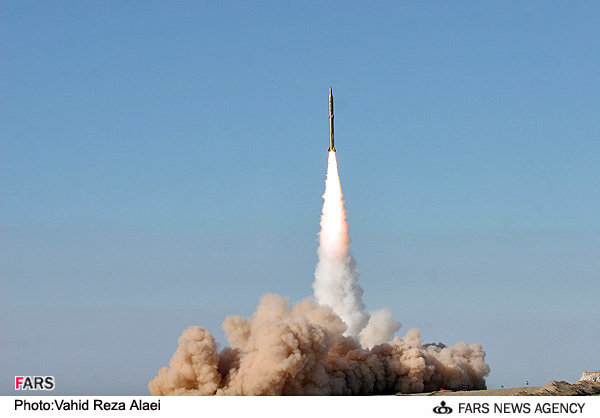
This is the kind of rumor modern war produces constantly: vivid, emotionally satisfying, strategically plausible in outline, and radically under-evidenced in detail.
The claim racing across social media is that one of Israel's most important generals — a central figure in operations in Gaza and Lebanon — was killed by an Iranian hypersonic missile strike at his house, despite the presence of a bunker or bomb-proof structure. Some versions add that the house was specifically targeted, others that the missile defeated hardened protection, and still others that the death has been deliberately concealed by Israeli authorities to avoid panic.
If true, it would be an extraordinary event. Not only because of the death itself, but because it would suggest a level of Iranian precision targeting, intelligence penetration, and missile performance that would alter the strategic conversation overnight. That is exactly why readers should slow down.
At the moment, the strongest publicly visible evidence for the full claim is weak. No high-confidence major reporting has established the death of such a figure in the form now being circulated. No authoritative public naming, clear visual confirmation, or official acknowledgment has emerged matching the dramatic specificity of the rumor. That does not prove the claim false. Wars do involve delayed disclosure, censorship, and strategic silence. But the burden of proof for a story this large should be far higher than screenshots, anonymous channels, and emotionally loaded captions.
Why does the rumor feel so plausible to so many people? Because it draws power from real background conditions. Iran has demonstrated the ability to strike inside Israel. Fragments and direct impacts have hit sensitive areas. Public anxiety is real. Israeli leadership visibility has been scrutinized obsessively. Rumors about who is missing, who has gone underground, and who is relocating have filled the information space. In that atmosphere, a story about a hidden death at home does not arrive into a vacuum. It arrives into fertile psychological terrain.
There is another reason such rumors work: they satisfy a desire for symmetry. Iran's own senior leadership has suffered decapitation strikes. Audiences sympathetic to Tehran want to believe Israel must be suffering comparable hidden losses. Official asymmetry is emotionally intolerable to partisan publics. If one side visibly loses ministers and commanders, the other side must, in the mythic logic of wartime audiences, be hiding similar wounds. The bunker-death rumor resolves that imbalance.
This does not mean the underlying scenario is impossible. Modern precision warfare does threaten homes, compounds, bunkers, safe rooms, and residences once considered politically protected. Hypersonic is a loaded term, often used more loosely online than in technical doctrine, but increasingly fast and evasive strike profiles are part of modern arsenals and narratives. It is entirely reasonable to ask whether Israeli elites feel safer than they did two weeks ago. They almost certainly do not.
Yet the gap between "they no longer feel safe" and "a specific top general was definitely killed in his bomb-proof house and the state is concealing it" is enormous.
One should also consider the incentives for misinformation here. Iran and its aligned media ecosystems benefit from projecting vulnerability into the Israeli command layer. Such stories create fear, force denials, shift attention, and make every absence suspicious. Israel, meanwhile, benefits from opacity if there really was a serious strike, but it also benefits from not dignifying every rumor with response. That creates an information vacuum in which the loudest claims thrive.
There is a technical angle too. Claims about missiles penetrating hardened structures often circulate with impressive confidence from people who have seen no battle damage assessment, no blast analysis, and no credible forensic imagery. "Hypersonic" in particular has become a prestige word in online war discourse, used as much for psychological effect as for accurate description. It signals inevitability. It tells audiences the target never had a chance. That is why propagandists love it.
So what should readers watch for if they want to know whether a story like this is becoming real rather than theatrical? Delayed but coherent reporting from multiple serious outlets. Named official replacements or unexplained succession changes. Funeral indicators. Localized mourning or military notices. A pattern of silence too structured to be ordinary. None of that has yet risen clearly into view in support of this specific claim.
That does not settle the matter forever. Wartime truth often arrives late. But as of now, the safest conclusion is that the story is a classic high-impact rumor built around real battlefield anxiety and insufficient proof. It is powerful because it tells a satisfying story: that Iran can now reach not only bases and infrastructure, but the private space where power sleeps.
Whether or not this specific death happened, the rumor reveals something true about the war. Israeli senior figures are now being imagined by millions not as remote commanders behind untouchable layers of security, but as men whose homes, routes, and nights may no longer be beyond reach. Sometimes that psychological shift matters almost as much as any verified strike.