Iran Says It Fired Cruise Missiles at the USS Abraham Lincoln. What Is Actually Confirmed — and What Still Isn't
Iranian state media says cruise missiles were fired toward the USS Abraham Lincoln near Chabahar and forced the carrier to reposition. The claim is dramatic. The confirmed facts are narrower — but still serious enough to watch closely.
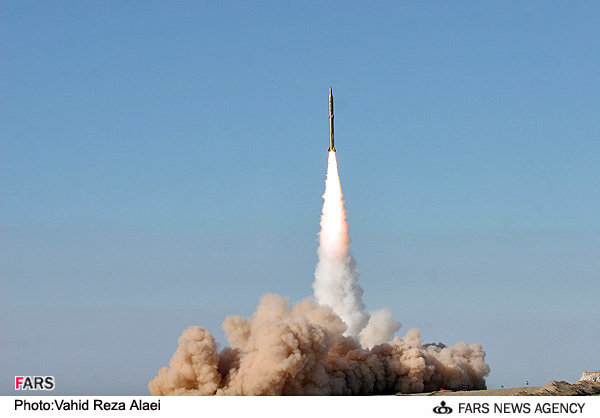
A war that began with airstrikes and missile barrages was always likely to return to the sea.
The latest example is one of the most dramatic claims yet: Iranian state media and follow-on international reports say Iran fired cruise missiles toward the USS Abraham Lincoln near Chabahar and forced the carrier strike group to reposition. If true in the strongest sense often implied online, it would represent one of the most serious direct naval confrontations of the war. But readers should slow down before treating that conclusion as settled.
Here is what can be said with confidence. Reuters reported in January that the USS Abraham Lincoln and accompanying warships entered the U.S. Central Command region, expanding Washington's ability to defend forces and potentially take military action against Iran. Reuters has also reported extensively on the maritime dimension of the conflict: the effective closure of the Strait of Hormuz, attacks on Gulf-linked infrastructure, and Iran's long-standing effort to develop or acquire anti-ship missile capabilities. In late February, Reuters reported that Iran was close to a deal with China to purchase supersonic anti-ship missiles. So the basic naval risk environment is real.
What is not independently confirmed by Reuters, at least so far, is the specific operational claim that Iranian missiles struck, damaged or decisively forced the carrier to maneuver. Secondary reporting cites Iranian state media and officials saying coastal cruise missiles were launched and that the carrier group altered position. U.S. confirmation is absent. That does not automatically make the claim false. It simply leaves it in the category where wartime assertions often begin: plausible enough to matter, unverified enough to handle carefully.
This distinction is important because naval encounters are uniquely vulnerable to information distortion. A ship can maneuver for many reasons — threat response, standard defensive protocol, deception, air operations, sensor posture or weather. One side may describe maneuver as retreat. The other may refuse to comment at all. Between those narratives, social media fills the vacuum with certainty it does not possess.
Still, the claim's strategic meaning extends beyond whether a missile found its mark. If Iran is publicly naming a U.S. carrier and presenting itself as able to challenge it, that alone is a signal. Carriers are not just platforms. They are icons of American power projection. To narrate one as targetable is to contest the hierarchy of fear on which U.S. naval dominance partly depends.
And Iran has reason to make that contest visible. It cannot easily match the United States in blue-water naval terms. What it can do is raise the perceived cost of operating near its littoral zone. That is where coastal cruise missiles, drones, mines, smaller naval assets and geographic compression matter. The waters around southern Iran have long been viewed by Tehran not as open ocean but as a battlespace in which asymmetry can neutralize prestige. Even the idea that an aircraft carrier must respect Iranian missile envelopes is politically useful to Tehran.
For Washington, the challenge is the opposite. The U.S. wants to preserve freedom of action without appearing reckless. If it publicly downplays every Iranian claim, it risks looking evasive if evidence later emerges. If it acknowledges too much, it amplifies Tehran's narrative. Silence therefore becomes part of the operational landscape. In a strange way, the lack of official U.S. confirmation can make the rumor travel further, not less.
There is also the Chabahar factor. The area sits near a set of maritime routes and strategic anxieties that are already intensified by the Hormuz crisis. Any suggestion of direct carrier-targeting there affects not just military audiences but insurers, traders and governments dependent on Gulf and Indian Ocean traffic. A missile fired at a carrier is never only a military story. It is a message to every actor whose assumptions rest on U.S. ability to keep sea lanes governed.
Could Iran have launched missiles in the carrier's direction without achieving a hit? Absolutely. Could the carrier group have adjusted position as a routine defensive response to a detected threat? Also plausible. Could Tehran then reframe that as proof of coercive success? Certainly. In modern war, narrative victory often begins well before physical clarity arrives.
That is why the strongest conclusion right now is also the most disciplined one. The maritime war is deepening. The USS Abraham Lincoln is a real player in that war. Iran wants the world to believe even the carrier is within reach. But the online version of events — carrier struck, carrier routed, balance of power transformed — moves faster than the independently confirmed record.
Readers should therefore watch what happens next rather than overinvesting in a single claim. Are there repeated Iranian references to the carrier? Do U.S. officials issue quiet denials or change posture? Do commercial shipping patterns respond? Does the war's center of gravity continue drifting from airspace toward contested littoral waters?
If it does, then the significance of this episode may endure even if the literal missile story remains disputed. Naval war is not only about what sinks. It is also about what can be made to look vulnerable. And right now, both Tehran and Washington are trying to control that picture before anyone outside the classified channels knows exactly what happened.