$800 Billion Gone, Oil Spiking, Bitcoin Whipsawing: Is the Iran War About to Break the Market's Last Illusion?
As oil surges and Wall Street posts its weakest close of the year, the next argument is already raging online: does war make bitcoin the ultimate escape hatch, or just another risk asset waiting to be crushed with everything else?
The day the market finally looked scared, it did not look cinematic. There was no single collapse candle, no trading halt, no one magical chart that explained everything. Instead there was a familiar modern sequence: oil up hard, equities down broadly, traders talking inflation again, central bankers looking trapped, and the internet instantly splitting into two camps about bitcoin. One side declared this is exactly what crypto was built for: fiat panic, geopolitical disorder, state overreach, capital controls, monetary distrust. The other side said the opposite: when real stress hits, bitcoin does not become gold — it becomes leveraged risk with better branding.
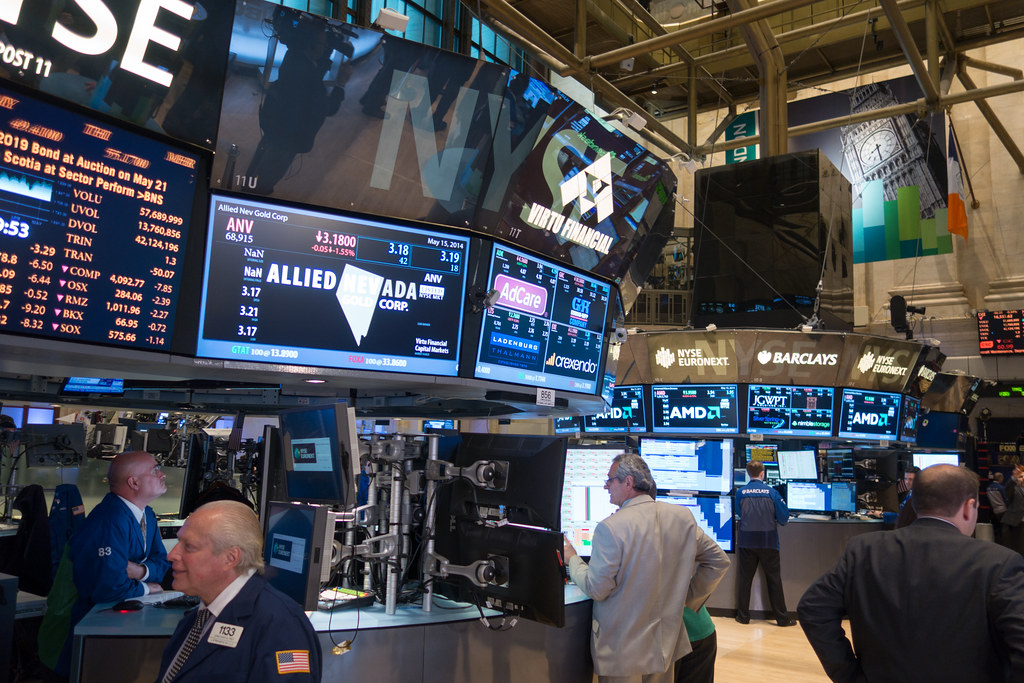
Reuters gave the clearest snapshot of the conventional market side. Wall Street closed lower as the Iran war intensified and crude surged, while oil on March 19 briefly sent Brent above $119 and WTI to $100. The user's numbers — over $800 billion wiped from U.S. stocks, Brent over $111, crude over $98 — are directionally consistent with the kind of move Reuters is describing, even if intraday and closing figures differ. In other words, the exact scoreboard may shift by the hour, but the underlying signal is unmistakable: the war has moved from being a geopolitical story that markets monitor to a macro story that markets must price.
Why does that matter? Because markets can digest one shock more easily than three at once. A regional war by itself can sometimes be framed as temporary. An oil spike by itself can be treated as a tax on growth. A war-driven oil spike combined with inflation fears and looming fiscal escalation is different. That starts to threaten the comforting narrative investors had built for 2026: that growth would slow but not break, that inflation would drift lower, that central banks would eventually regain room to ease, and that geopolitical instability would remain noisy but containable.
Now the containable part is in doubt. Reuters reported that Brent's surge followed attacks on energy facilities across the Gulf after Israel struck Iran's South Pars gas field. Once major exporters, LNG hubs and shipping routes are involved, investors stop asking whether the war is "local" and start asking whether it can stay compartmentalized inside prices. The answer so far looks like no.
Which brings us to bitcoin. The "nuclear bitcoin" argument spreading online is really two separate arguments pretending to be one.
The bullish version goes like this: war proves the fragility of the dollar system, the vulnerability of centralized banking, and the political risk embedded in payment rails, sanctions and capital regimes. If oil is being repriced, shipping is being disrupted and governments are openly discussing currency blocs, corridor payments and alternative settlement systems, then a borderless digital asset with fixed issuance should benefit. In this story, bitcoin is not a tech stock. It is the monetary hedge of last resort for an age of sanctions, blockades and alliance fragmentation.
The bearish version says that story only works if the financial system is under pressure in a way that still leaves plenty of liquidity chasing alternatives. But when war actually squeezes inflation higher and pushes yields, funding stress and recession fears in the same direction, bitcoin often trades like what it is in practice: an asset heavily owned by people who also own growth stocks, use leverage, and need dollars when the screen turns red. In that story, bitcoin is not digital gold. It is digital beta.
Both readings contain truth. And that is why the most honest answer to "will bitcoin skyrocket or go to zero?" is unsatisfying but real: neither extreme is the base case, and the path depends less on missiles than on monetary transmission.
If oil stays elevated but not catastrophic, central banks remain cautious, and states begin talking more openly about payment fragmentation and energy settlement politics, bitcoin's political narrative strengthens. If, however, the war triggers a genuine liquidity squeeze, margin calls, credit stress and a rush into cash and short-duration safety, bitcoin's "anti-system" pitch may not save it from acting like a high-volatility risk asset first and a monetary thesis second.
There is another layer here that deserves more attention: bitcoin now sits at the intersection of two opposite impulses. It is owned by anti-state libertarians who distrust war and fiat. But it is also being increasingly integrated into state-regulated, institutionally intermediated financial structures. The more mainstream it becomes, the less cleanly it behaves like an outsider hedge. In a crisis, that cuts both ways. Greater legitimacy can attract defensive inflows. Greater integration can also synchronize it with the same macro de-risking that hits equities.
What should readers watch instead of slogans? First, oil persistence, not just oil spikes. One-day panic is noise; sustained high energy costs change macro policy. Second, credit spreads and funding conditions. If stress spreads from commodities into credit, bitcoin's downside risk rises. Third, policy language. If governments start openly talking about capital restrictions, sanctions workarounds, currency corridors or emergency financial controls, bitcoin's narrative power grows even if its price lags at first. Fourth, retail behavior. Do people actually buy bitcoin because they fear the system, or do they sell it because they need liquidity? That distinction decides more than ideology does.
So no, this is not automatically "the end of the dollar," and no, it is not automatically "the end of bitcoin." It is something more complicated and more revealing: a live test of whether markets still believe the world can absorb a Middle East war, an energy shock, and mounting fiscal escalation without rethinking the architecture underneath them.
The stock-market hit is the symptom. The oil spike is the accelerant. Bitcoin is the argument. And the real question is not whether one asset wins a meme war this week. It is whether this conflict is exposing the point at which financial markets stop treating geopolitics as background noise and start treating it as the main event.