King Charles Flower Moment Goes Viral: Why a Tiny Protocol Gaffe Became Big Geopolitical Theater
A brief awkward exchange involving King Charles, children and flowers in the United States has gone viral. It is not a strategic crisis, but in a tense diplomatic visit overshadowed by war, optics still matter.
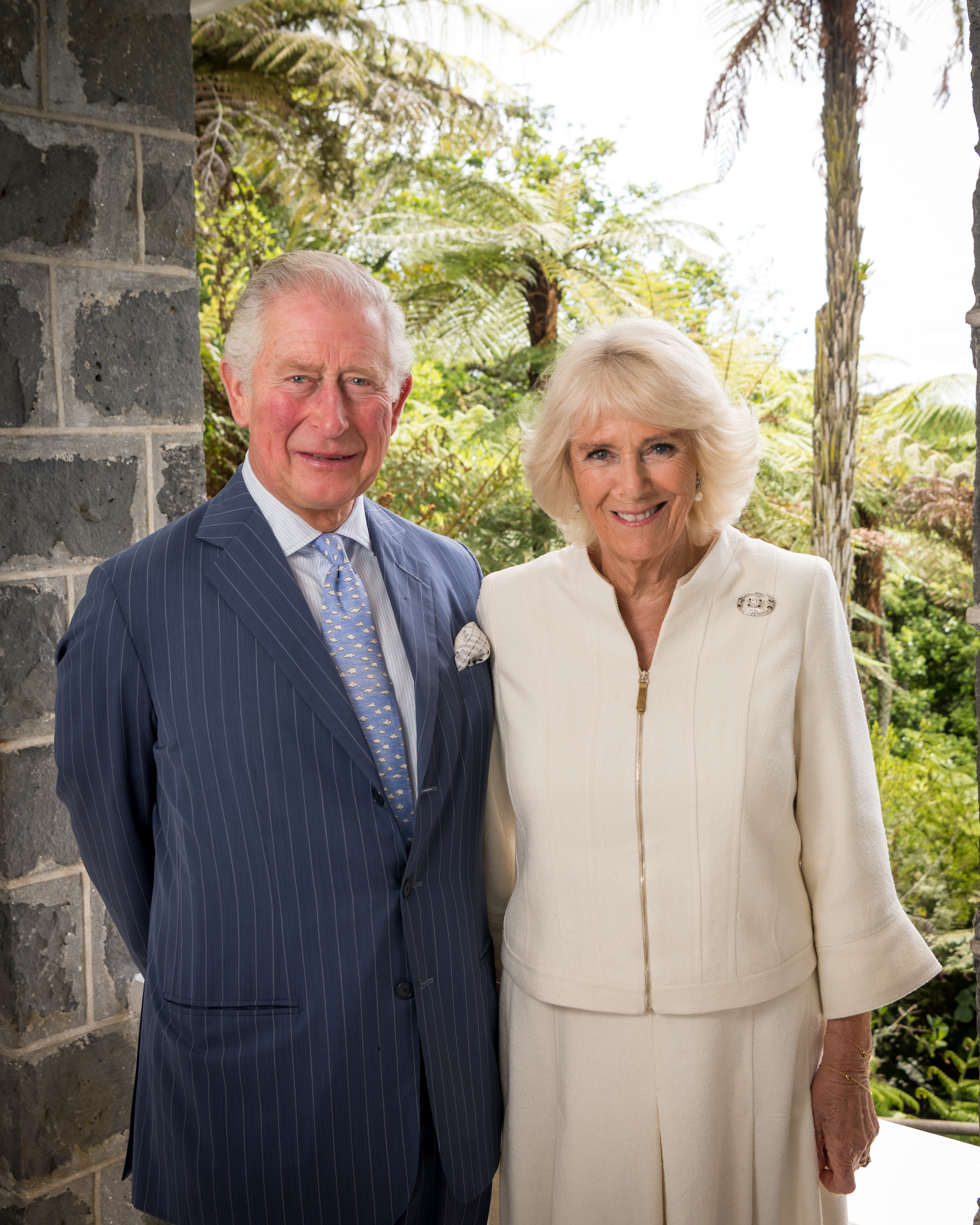
A small protocol moment involving King Charles, Queen Camilla, two children and a bouquet of flowers has gone viral during the monarch’s visit to the United States. In ordinary times, it would be a harmless clip: a brief confusion over who should receive flowers, a correction by hosts, a handshake, a child looking uncertain, and the internet doing what the internet does. But these are not ordinary times, and that is why the clip traveled so fast.
The king’s U.S. visit is taking place in an atmosphere already crowded with tension: the Iran war, domestic American political violence, strained Western alliances, energy insecurity and debates over whether Britain remains a serious global actor or mostly a ceremonial one. In that context, even a minor royal stumble becomes content for larger narratives.
Protocol matters in monarchy because monarchy is protocol. Unlike elected politicians, kings do not hold press conferences to explain policy or improvise political arguments. Their power is symbolic. The choreography is the message. A handshake, a bouquet, an arrival line, a military band, a seating plan and a facial expression all become part of the performance of continuity and dignity. When the choreography breaks, even slightly, people notice.
That does not mean the moment was important in itself. Children can be confused. Adults can miss cues. Hosts can correct awkwardly. The king can simply return, accept the flowers and move on. The danger is not the incident; it is the hunger for interpretation. Online audiences now convert every gesture into proof of decline, arrogance, irrelevance, illness, disrespect or geopolitical insult.
The royal family is especially vulnerable to this because it exists inside a paradox. It must appear human enough to be loved, but ceremonial enough to justify itself. If King Charles reacts too stiffly, he is mocked as cold. If he reacts too casually, the institution looks diminished. If he misses a cue, critics call him out of touch. If he corrects it, the clip still circulates.
Queen Camilla’s awareness of the protocol in the clip, as some viewers framed it, became part of the viral story. That interpretation may be unfair, but it reveals how audiences read royal couples. The monarch is expected to embody the institution. The consort is often seen as the stabilizer, the one who notices small human details and keeps the scene flowing. Whether or not that is what happened, the internet turned it into a miniature drama of awareness and awkwardness.
Why does this belong in a geopolitics feed? Because soft power is made of precisely these images. Britain’s global role is no longer defined by empire, industrial dominance or military reach. It is defined partly by finance, diplomacy, intelligence cooperation, culture and monarchy. The king’s presence in Washington is not policy, but it is atmosphere. It says the old alliance still has ritual weight. It says continuity remains useful when elected politics becomes unstable.
The problem is that rituals now compete with viral ridicule. A state visit once passed through newspapers, official photographers and evening broadcasts. Today it is clipped, slowed down, captioned, mocked, reinterpreted and thrown into ideological ecosystems within minutes. A bouquet moment can become anti-monarchy content, anti-British content, anti-elite content, or simply a joke.
This does not mean leaders should fear every camera. It means symbolic institutions must understand that the audience has changed. The viewer is no longer passively watching ceremony. The viewer is editing ceremony. The viewer is producing counter-meaning.
There is a deeper generational question here too. Children carrying flowers at royal events are supposed to represent innocence, continuity and respect. But when a child appears confused or unimpressed, the visual symbolism reverses. Instead of the young honoring the old institution, the old institution appears to be chasing the cue. That is why the clip felt funny to some and uncomfortable to others.
Still, perspective is necessary. No diplomatic relationship will rise or fall because of a bouquet. The U.K.-U.S. relationship depends on defense cooperation, intelligence sharing, trade, finance and political alignment, not whether a child handed flowers smoothly. But public perception is cumulative. States do not only communicate through treaties. They communicate through images, and images are now unstable.
The viral moment also shows how exhausted audiences are. In a week of war, oil shocks, sanctions, missiles and political violence, a royal protocol mistake offers a lighter symbolic battlefield. People project onto it because it is easier to argue about awkward flowers than about hypersonic missiles or sanctions architecture.
So what did the moment mean? Perhaps very little. Perhaps only that even kings can miss a cue. But the reaction meant more. It showed that monarchy in the digital age is no longer protected by ceremony. Ceremony itself is now raw material for the feed.
In a world of collapsing seriousness, even flowers become geopolitics.