North Korea’s Nuclear Mountain Is Still Shaking: 1,300 Quakes Raise a New Risk at Punggye-ri
Researchers say North Korea's underground nuclear tests destabilized faults beneath Mount Mantap, producing more than 1,300 earthquakes after the 2017 blast.
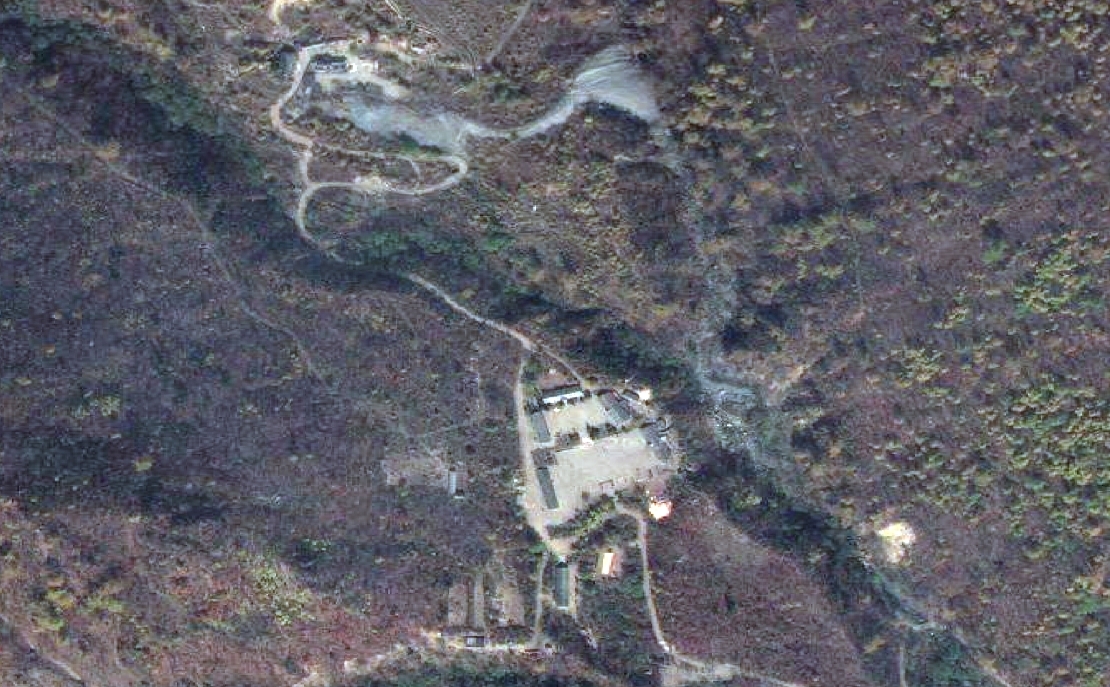
Nearly a decade after North Korea's largest underground nuclear explosion, the mountain above its test tunnels is still responding. Researchers analyzing years of seismic records say roughly 1,330 earthquakes followed the 2017 detonation around Mount Mantap at the Punggye-ri nuclear test site, with activity becoming more frequent and stronger through 2025.
The finding is concerning, but not for the reason many breaking-news posts imply. It does not show that Pyongyang has begun another nuclear test or that an explosion is imminent. It suggests that repeated tests altered stress on existing faults and turned the surrounding rock into a longer-term earthquake source.
North Korea conducted six known underground nuclear tests at Punggye-ri between 2006 and 2017. The final test was far larger than the earlier detonations, with estimates commonly ranging from about 100 to 250 kilotons. Satellite radar measurements indicated that Mount Mantap expanded outward and then subsided, evidence of dramatic deformation underground.
Small aftershocks immediately following an underground explosion are expected. What surprised researchers was the persistence and evolution of the sequence. Their analysis found that earthquakes clustered along a fault zone around 24 kilometers wide. Rather than fading quickly, activity increased after the 2017 blast and continued for years.
The proposed mechanism is stress transfer. An underground nuclear device creates a cavity, fractures nearby rock and sends seismic energy through the mountain. Repeated explosions can weaken structures and redistribute pressure onto faults that were already present. Once disturbed, those faults may continue adjusting independently of any new test.
One researcher warned that the activated fault system could be capable of an earthquake around magnitude 6.4 if a larger segment ruptured. That is a scenario, not a forecast. Seismology cannot provide a date, and the probability is not equivalent to saying such an earthquake will occur.
The risks extend beyond shaking. Tunnel collapse could release contaminated dust or gases locally, although the degree of containment depends on depth, geology and fracture pathways. A strong earthquake could damage monitoring equipment, nearby settlements or infrastructure. It could also complicate interpretation of future seismic signals because natural, induced and explosive events must be distinguished rapidly.
For intelligence agencies, Punggye-ri has always been a remote-sensing problem. Analysts combine seismic waveforms, satellite imagery, thermal observations, excavation activity and atmospheric sampling. An actual nuclear explosion has characteristic seismic features, but a damaged and active mountain produces background signals that can create uncertainty.
North Korea has repaired and maintained parts of the site after announcing demolition of tunnel entrances in 2018. Satellite imagery has periodically suggested readiness activity. The new study neither confirms nor refutes political intentions to test again; it adds a geological constraint that planners in Pyongyang must consider.
Researchers can also learn from the sequence beyond North Korea. Underground explosions have triggered earthquakes at other test sites, including Nevada and Soviet-era facilities, but modern dense seismic networks and satellite radar allow scientists to trace much smaller events. The Punggye-ri record may improve models of how repeated blasts interact with faults—knowledge relevant to test-ban verification and to civilian projects such as mining, geothermal injection and reservoir construction.
A new test in an already fractured massif might vent radioactivity more readily or produce unpredictable collapse. North Korean engineers may believe unused tunnels or different portals reduce that risk. Outside experts lack access to the internal maps and rock measurements needed to know.
The study also demonstrates a wider truth about underground nuclear testing: detonation effects do not end when the seismic waves leave global headlines. The test changes a physical landscape, sometimes for years, and the consequences can cross the boundary between military secrecy and environmental hazard.
What to watch next
Will independent monitoring detect continuing growth in earthquake magnitude or migration along the fault? Does satellite imagery show new excavation at unused portals? Can atmospheric sensors identify leakage? And will the geological damage deter Pyongyang from another test—or merely push it toward a different tunnel?