Did Houthi Missiles Paralyze Riyadh Airport?
Explosions and flight disruption were reported around Riyadh, but claims that a Yemeni barrage directly hit King Khalid Airport remain unconfirmed.
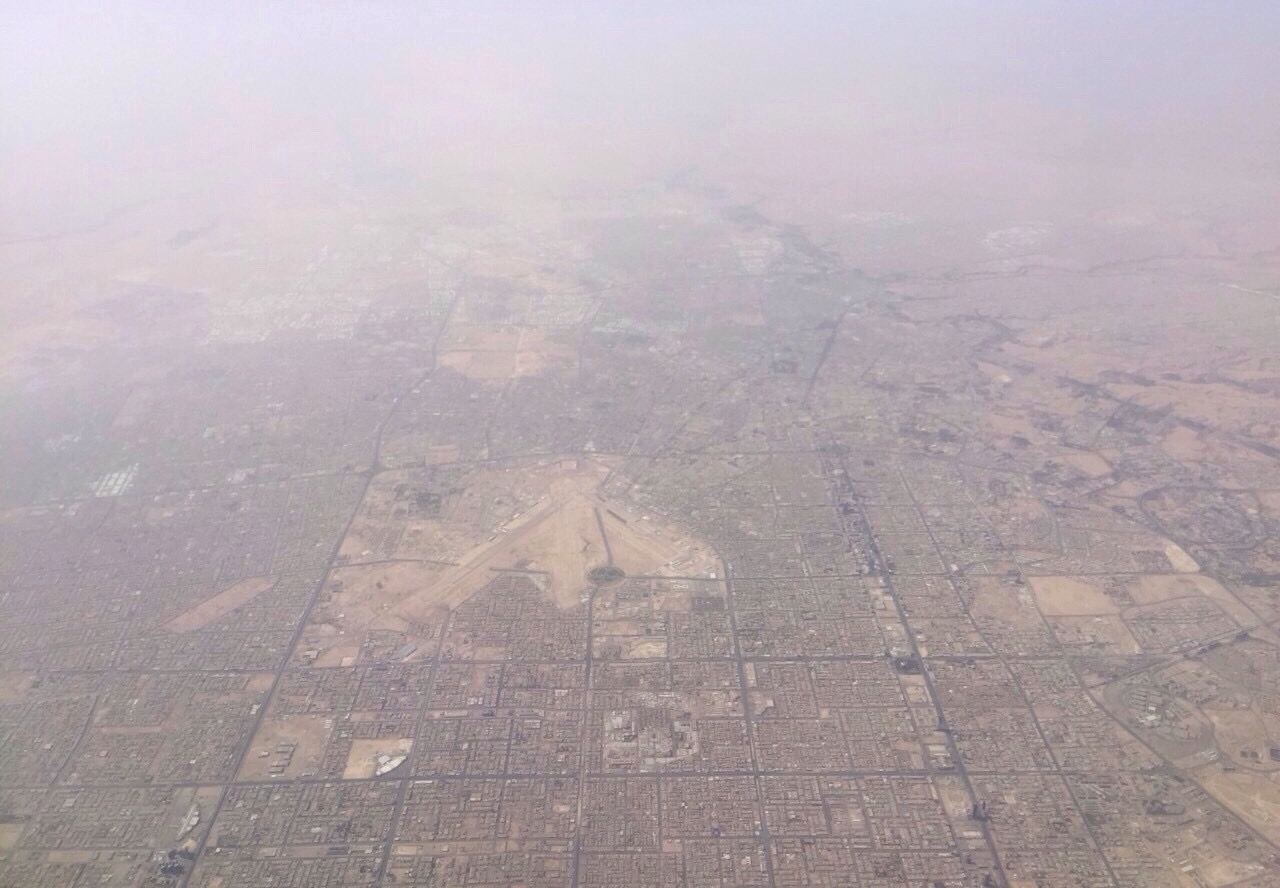
Explosions shook northern Riyadh as flight boards showed delays and cancellations at King Khalid International Airport. Ansarullah supporters called it proof that a Yemeni missile barrage paralyzed the Saudi capital. The disruption is credible; a direct hit on the airport is not yet established.
Reuters reported that Ansarullah claimed attacks on King Khalid Airport, an Aramco facility in Rabigh, Abha airport and Khamis Mushait military base during the latest escalation. Saudi Arabia and Aramco did not immediately confirm damage, and the claims could not be independently verified.
Flight disruption can occur without a runway or terminal being struck. Air-raid warnings may close airspace, hold departures, divert arrivals and force crews beyond legal duty limits. Interceptor launches and falling debris can also require inspections. A burst of cancellations therefore shows a serious security event but does not identify what exploded.
Videos of flashes and smoke require geolocation and timestamps. Riyadh has experienced several alerts in recent weeks, and older footage of airport disruption has circulated with new captions. A flight board may also reflect accumulated delays from weather, crew rotations or airspace restrictions elsewhere in the region.
The strongest version of the claim would require evidence of impact inside the airport perimeter: satellite imagery, debris, runway closures for repair, photographs from a known terminal or an official safety notice. None was publicly available at the time of writing.
Saudi silence does not prove there was no damage. Governments often restrict images of sensitive infrastructure and may delay announcements during an active attack. Ansarullah also benefits from exaggerating effects because disrupting confidence in Saudi aviation can produce economic damage even when missiles are intercepted.
King Khalid is both a civilian transport hub and a strategic national asset. An indiscriminate attack on civilian airport operations would raise serious legal concerns. If military facilities or aircraft operate nearby, attackers must still distinguish targets and account for the foreseeable danger to passengers and crews.
The episode demonstrates the asymmetric pressure Saudi Arabia faces. It may spend expensive interceptors against relatively low-cost drones and missiles, while a temporary alert can disrupt hundreds of journeys. The attacker does not need to destroy a terminal to impose cost.
Passengers should rely on airline and airport notifications rather than viral maps. Changing routes or approaching the airport during an alert can create additional danger. Airlines may restore schedules in stages even after authorities give an all-clear.
Market effects should be separated from physical damage. Airlines may temporarily price in risk, insurers may adjust coverage and travelers may postpone trips even if every missile misses. That psychological effect is part of modern long-range warfare and can reward exaggerated claims.
Saudi authorities could reduce rumor by issuing a concise post-incident report: number of incoming threats, interceptions, debris locations, injuries and operational downtime. Security concerns may justify withholding weapon-system details, but refusing all information leaves passengers and investors dependent on partisan accounts. Ansarullah should face the same evidentiary standard; a claim of responsibility is not proof of successful impact. The most accurate early headline is disruption during an alleged attack, not destruction of the airport.
Aviation data can offer indirect clues. A short nationwide ground stop followed by rapid recovery points toward precaution, while a single closed runway or repeated diversions over many hours may indicate debris or damage. Public tracking has gaps because aircraft can hold outside the region or cancel before appearing airborne, so screenshots should be compared with airline notices.
Civil-defense reports on falling interceptor fragments are equally important. Successful defense can still damage homes or airport property, and governments sometimes describe every ground explosion as harmless debris before inspection. Independent confirmation should not begin with an assumption that either the attacker or defender is truthful. It should reconstruct time, trajectory and location from multiple observations, then state the remaining uncertainty plainly. Passenger testimony can support a timeline, but fear and distance make eyewitness estimates of impacts unreliable without physical corroboration from investigators on the ground today.
What to watch next
Watch official NOTAMs, runway status, dated satellite imagery, airline diversions and independently geolocated damage. Explosions and operational disruption are plausible and partly documented. The claim that Houthi missiles directly struck and paralyzed King Khalid Airport remains unproven.