A Third Train Came Within Miles of the Urda Wreck—Could Spain’s Deadly Crash Have Been Even Worse?
A preliminary reconstruction says another AVE stopped on the opposite track near the crash site, while a fourth train driver rejected an unsafe instruction. The cause of the third train's stop is not confirmed as a catenary failure.
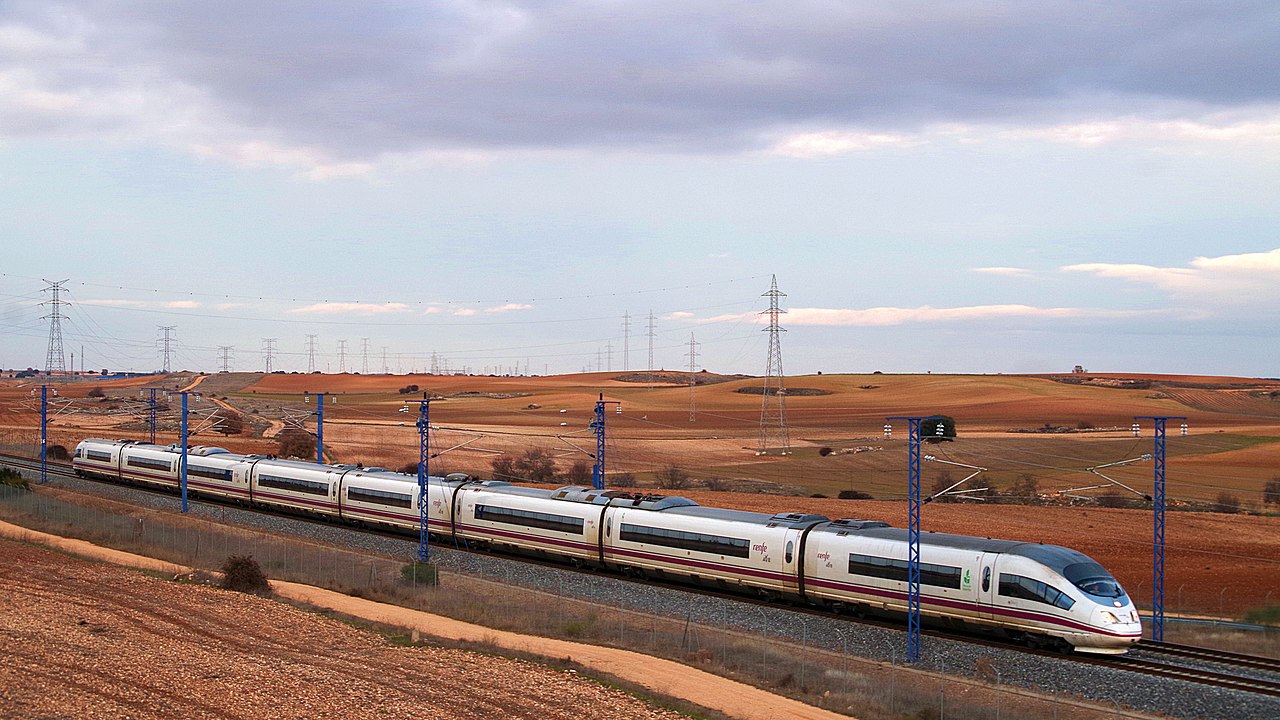
Spain's preliminary investigation into the Urda collision has revealed that a third train stopped near the wreckage on the opposite track, while another driver reportedly rejected an instruction to resume normal speed. The details suggest the October 28 disaster could have been even worse. They also complicate early claims that a single controller's mistake explains the entire sequence. Investigators now describe a chain involving system failures, instructions and train movements across a wide stretch of track.
What happened to the third train?
The Seville-to-Madrid AVE 02061 was moving in the opposite direction from the two trains that collided. The preliminary reconstruction says it stopped around 8:39 a.m., about 6.4 kilometers from the crash site, remained there for roughly 13 minutes, then began moving again shortly before the collision at 8:53. It was traveling slowly and stopped again, ultimately about two kilometers from the wreck. Reports do not confirm that a catenary failure caused this train's stop; that explanation should not be repeated as fact.
A separate Iryo train reportedly received an incorrect order from the Atocha control center to resume normal service. Its driver questioned the instruction and insisted on proceeding at reduced speed. An Avant train also moved in the area after earlier stops. The preliminary inquiry says the LZB automatic train-control system had failed across a section affecting multiple trains, and that traffic continued under backup procedures and telephone instructions.
Why this changes the picture
Transport Minister Óscar Puente initially called the authorization for the colliding AVE to run normally “inexplicable.” The preliminary technical authority now describes a “chain of faults, instructions and actions,” and estimates the collision speed at between 160 and 200 kilometers per hour. Those findings are preliminary, but they point toward a systemic inquiry: what each controller knew, what drivers were told, and whether the fallback rules were followed.
The third train's proximity underscores how narrow the safety margin may have been. Its slow movement and stop near the scene could have prevented another collision, but the sequence also raises questions about why it was allowed to continue after the LZB failure. The fact that another driver challenged a speed instruction may show that individual judgment can serve as a safeguard—and that procedures were not consistently applied.
The final report still matters
Investigators have retrieved train data recorders and control-system logs. They will need to establish exact train positions, speeds, signal states, communications and the operation of backup systems. Filtrations and passenger videos can provide clues, but cannot replace a technical reconstruction.
Did a third train narrowly avoid disaster by chance, or did its driver and the system respond appropriately? Why did one driver follow an instruction while another rejected a similar one? And will the final report identify an isolated error or a chain of organizational weaknesses? The preliminary findings make the questions more urgent, not less.
Why the backup protocol matters
Rail safety depends on redundant systems, but redundancy is only effective if staff know when to stop traffic, how to communicate restrictions and what speed to use when automation fails. The fact that one driver challenged a normal-speed instruction may point to the value of professional judgment, but safety should not depend on a single person's willingness to disobey an order. Procedures need to make the safe action clear and supported.
The preliminary report may be revised as investigators analyze black boxes and signal logs. It is too early to assign criminal or disciplinary responsibility. At the same time, authorities should explain immediate safety changes for other trains and routes while the inquiry continues. What safeguards have been added since the crash? Can the public see that the same failure mode has been contained? A final report in a year cannot replace urgent interim action.