Sri Lanka Said No to U.S. Warplanes: Can a Small State Really Stay Neutral When Great Powers Want Its Runways?
Sri Lanka says it rejected a U.S. request to land armed warplanes at Mattala. In a war defined by bases, fuel, and logistics, that decision raises a bigger question: can a small country still act sovereignly, or is neutrality now just a luxury the powerful allow?
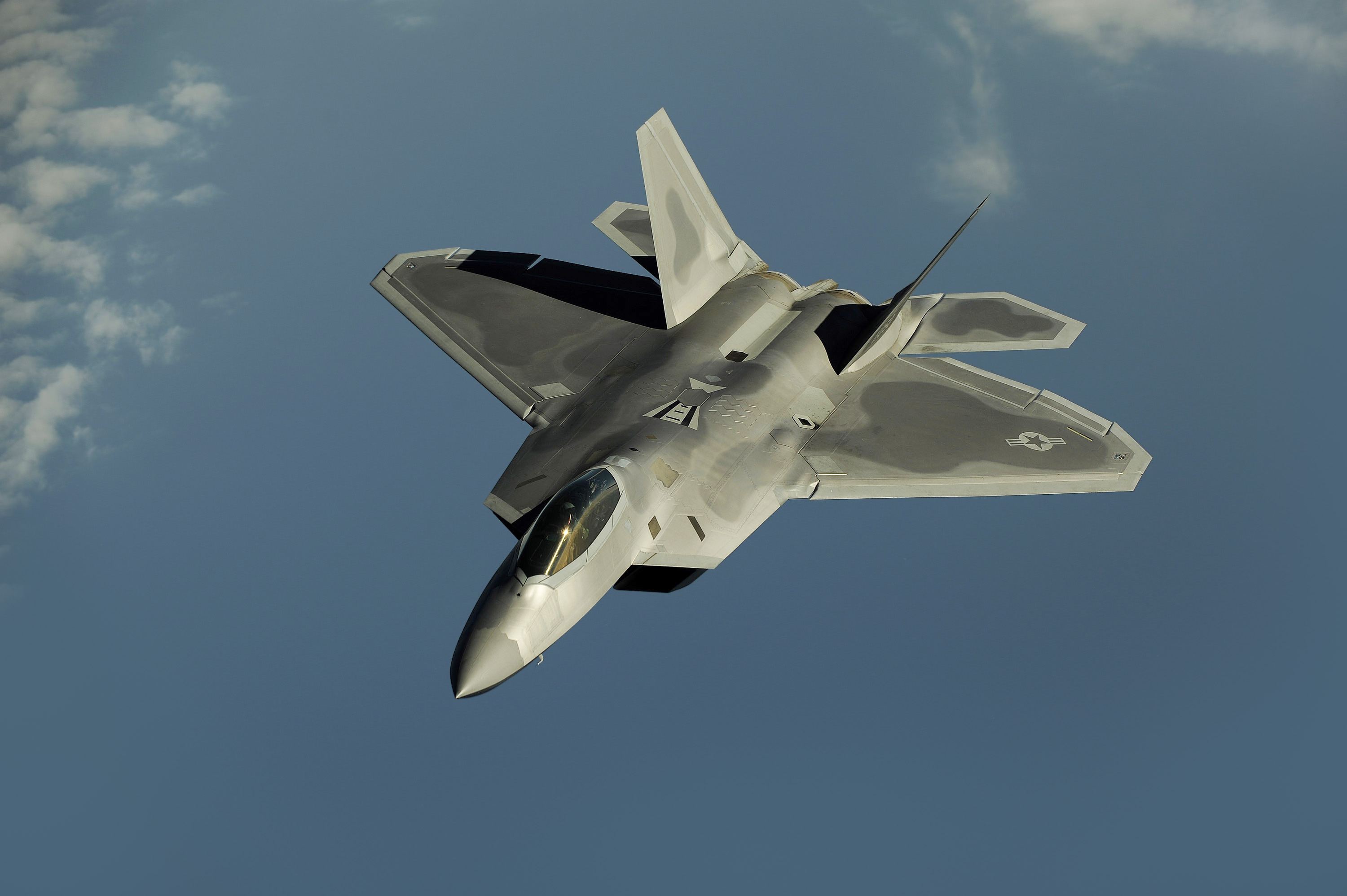
There are moments in international politics when a decision involving a minor airport in a small country says more about sovereignty than a summit communiqué ever could. Sri Lanka’s president told parliament that Colombo rejected a U.S. request in early March to allow two combat aircraft armed with anti-ship missiles to land at Mattala Rajapaksa International Airport. Reuters has now reported the episode, and its significance goes well beyond the tactical question of where two aircraft might have parked.
The larger question is uncomfortable and old: can a small state still say no to a major power and remain genuinely sovereign, or has sovereignty in the era of global logistics become conditional, negotiated, and temporary?
On its face, Sri Lanka’s answer was simple. President Anura Kumara Dissanayake said the government wanted to preserve neutrality and avoid allowing its territory to be used in a war that is destabilizing the wider region. He added a detail that makes the decision politically sharper: Iran had also sought clearance for a goodwill naval visit. Granting one side military convenience while rejecting the other would have destroyed the neutrality Colombo was trying to preserve. Seen from that angle, the decision was not anti-American. It was anti-entanglement.
That distinction matters. In the current information environment, every refusal is rapidly recoded as alignment with someone else. If a country says no to Washington, social media declares it has joined Tehran or Beijing. If it says yes, critics say it has surrendered sovereignty. Smaller states often live inside this trap. Their choices are interpreted not on their own terms but through the emotional needs of larger geopolitical narratives.
Sri Lanka’s case is especially interesting because it sits at the intersection of location, fragility, and memory. The island is strategically placed along Indian Ocean routes. It is still recovering from severe financial stress. It has deep trade interests with multiple sides. And it knows from experience that once a smaller state becomes useful as a logistical node, “temporary access” has a way of acquiring strategic meaning far beyond the original request. That is why the Mattala story resonates. It is not really about two aircraft. It is about the right to prevent your infrastructure from being absorbed into someone else’s war.
There are at least three ways to interpret Colombo’s refusal.
The first is the idealist reading: this is a rare case of a smaller democracy acting with principle. A government under pressure still chose neutrality, even when approached by a far more powerful state. In this view, Sri Lanka has shown that sovereignty is not dead. It may be constrained, but it can still be exercised if a government is willing to absorb diplomatic discomfort. Supporters of this view will argue that neutrality is not passivity. It is an active choice not to become a platform for escalation.
The second reading is more realist. Sri Lanka did not reject the United States out of abstract principle alone. It did so because the costs of saying yes outweighed the benefits. Allowing armed aircraft tied to anti-shipping operations into Mattala could have exposed the island to retaliation risk, domestic backlash, and strategic misinterpretation by other partners. Under this view, neutrality is not morality; it is prudent self-preservation. Small states stay neutral when neutrality is the least dangerous option.
The third reading is more cynical. A refusal today does not prove durable independence tomorrow. Small states can say no once and still remain highly vulnerable to financial, diplomatic, and strategic pressure over time. Washington may not need the runway enough to punish the decision heavily. If the stakes were higher, would the answer still have been no? This line of thinking does not deny the symbolism of the refusal. It questions how much structural power actually shifted.
That skepticism is worth taking seriously. Small-state sovereignty is always easier to admire in anecdote than to defend in sustained practice. Great powers possess tools well beyond military requests: trade leverage, financing, sanctions risk, security cooperation, intelligence relationships, diplomatic signaling, and reputational incentives. A runway request is visible; the pressure that follows may be far less so. When a government says it will remain neutral “despite many pressures,” the important words may be the last two.
Still, something important happened here. Sri Lanka demonstrated that strategic geography does not automatically erase agency. The country is not a superpower, but it is not a runway with a flag either. Its leaders judged that participating even indirectly in regional offensive operations would compromise its national position. That judgment may frustrate Washington and disappoint those who want a wider coalition against Iran. But frustration itself is evidence that the refusal had real meaning.
There is also a wider regional implication. If smaller or medium-sized states begin drawing harder lines around use of territory, airfields, ports, and logistics hubs, then the war becomes more expensive for the states trying to project power. Military reach depends on permissions as much as on platforms. In that sense, sovereignty is not only a moral concept; it is a logistical variable. Every denied landing, delayed access request, or hedged basing decision forces larger militaries to reveal just how dependent they are on the political consent of places they often describe as peripheral.
That is why the Mattala episode matters more than its scale suggests. It reminds everyone that “free, open, prosperous Indo-Pacific” language sounds different when translated into concrete demands on small countries. A state may welcome trade, diplomacy, and partnership while still refusing to become a staging ground for missiles. Those positions are not contradictory unless one assumes that partnership must always imply compliance.
Can small countries be sovereign? The answer is yes, but only in an imperfect and constantly tested sense. Sovereignty for a smaller state is not a permanent condition. It is a repeated act of refusal, balancing, and recalculation under pressure. Sometimes it fails. Sometimes it bends. Sometimes it survives for exactly one decision at a time.
Sri Lanka’s refusal does not prove that small-state neutrality is secure. It proves only that, for one important moment, a small state chose to behave as though its neutrality still belonged to itself. In a region where ports, airfields, and shipping lanes are being militarized by everyone else’s strategic needs, that is more consequential than it looks.