Turkey Says Iranian Ballistic Missile Debris Entered Its Airspace: Accident, Warning Shot, or a Message to NATO?
Hakan Fidan says Iran denied responsibility even as Ankara confronted Tehran with data showing ballistic missile intercepts tied to Turkish airspace. In a widening regional war, that contradiction matters because accidents, denials and signals can look dangerously similar.
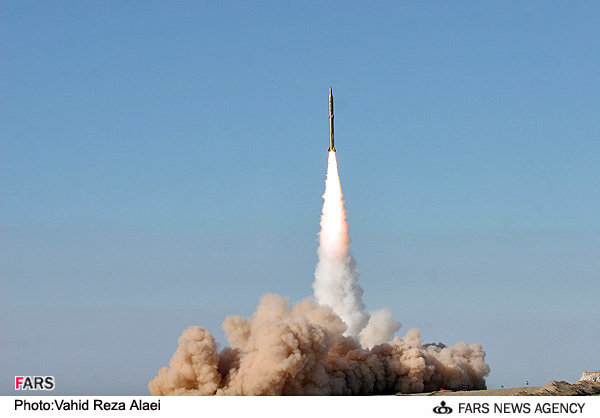
A widening war does not need a direct strike to create a new front. Sometimes it only needs a radar track, a phone call, and two governments telling slightly different stories about what crossed whose sky. That is why the statement now associated with Turkish Foreign Minister Hakan Fidan matters more than it may seem at first glance. The line is straightforward: he says he spoke to his Iranian counterpart about ballistic missile intercepts in Turkish airspace, Iran denied involvement, and Ankara is now discussing the contradiction between Tehran’s statement and the data Turkey says it has.
On its own, that sounds technical. In strategic terms, it is anything but technical.
Reuters reported on March 4 that a ballistic missile fired from Iran was detected heading toward Turkish airspace, prompting Ankara’s protest to Tehran. According to a Turkish diplomatic source cited by Reuters, Fidan told Iranian Foreign Minister Abbas Araghchi that steps widening the conflict must be avoided. Separate reporting carried by Iran International, citing Reuters, said Turkish authorities described the missile as having passed through Iraqi and Syrian airspace before being intercepted by NATO-linked air defense assets in the Eastern Mediterranean, with debris falling in Hatay. No casualties were reported. Iran, in the viral version now circulating, is said to deny involvement or at least deny responsibility for any intentional intrusion.
That opens several possible readings, and each one has different consequences.
The first is the least dramatic but in some ways the most frightening: it was an accident. Missile trajectories are not abstractions. In a dense air and missile environment involving interceptions, jamming, altered flight paths and rushed launch decisions, objects do not always land where planners intend. If this was an accidental near-entry into Turkish airspace, it illustrates how quickly the war can spill into countries that are not formal belligerents without anyone making a conscious decision to open a new theater. That matters especially for Turkey because it is not just another neighbor. It is a NATO member with its own volatile borders, its own air defense calculations and its own history of sharp escalation after airspace incidents.
The second interpretation is that it was not exactly an accident, but not quite a direct attack either. States sometimes use near misses and deniable trajectories as signaling tools. A missile headed toward, through, or near another country’s airspace can function as a message: your geography is part of the war whether you admit it or not. In that reading, the denial is not inconsistent with the act. It is part of the act. Tehran can say it did not target Turkey while ensuring Ankara understands that the regional sky is no longer compartmentalized.
The third possibility is that the contradiction itself is the message. Fidan’s public framing — they deny involvement, we have data — suggests not merely a private protest but a deliberate exposure of ambiguity. Turkey may be telling Iran: we are not going to let “fog of war” be used as diplomatic cover if our territory or airspace is being dragged into this conflict. This fits Ankara’s broader pattern of trying to remain maneuverable while refusing to appear passive. Turkey does not want war with Iran. It also does not want to look like a country whose airspace can be grazed without consequence.
There is a fourth layer too, and it concerns NATO. Once a ballistic track approaches or enters Turkish airspace, even if only briefly, the issue stops being purely bilateral. It becomes a live test of how NATO territory is buffered during a Middle Eastern regional war. That does not mean alliance mechanisms automatically activate. It does mean every such incident is read through alliance logic, especially by states wondering whether the conflict can remain geographically bounded. A single intercepted missile does not trigger collective defense. Repeated incidents, contradictory denials and rising public pressure create a different atmosphere.
Iran’s perspective, if one grants the most charitable reading, may be simpler: Tehran is under broad attack, its missiles are flying across multiple axes, and not every trajectory is intended to create a diplomatic crisis with Turkey. Iranian officials may genuinely see the incident as a byproduct of wartime complexity rather than a strategic choice. But even if that is true, the burden of proof does not disappear. When one state says “you crossed our airspace” and the other says “we deny involvement,” the gap between them becomes its own political event.
There is also a domestic Turkish angle. Ankara has spent years balancing between Western alliance structures, regional power politics, and a self-image as an autonomous strategic actor. That balancing act becomes harder when external actors force binary readings. If Turkey protests too weakly, critics can say it tolerates Iranian recklessness. If it reacts too aggressively, it risks becoming the next state absorbed into a war it says it wants contained. Fidan’s wording reflects that tightrope: calm enough to avoid panic, sharp enough to register that Ankara is not indifferent.
The wider lesson is uncomfortable. In wars like this one, escalation no longer requires deliberate crossing by troops or aircraft. It can happen through debris, interception geometry, proximity, and layered deniability. The old map of “in” and “out” no longer works cleanly. A state can be outside the war politically and still inside it physically, if only for seconds at a time.
That is what makes the Turkish case more important than the immediate damage report. No one was killed. No city was struck. Yet the incident exposed a structural vulnerability that many countries around the conflict now share: they are close enough to the war to be touched by it, but not close enough to control its logic.
So was it an accident, a warning shot, or a message to NATO? At the moment, the strongest answer is that it may have been some mixture of all three. And in strategic terms, that may be the most dangerous answer of all. Accidents can be denied. Signals can be misread. Messages can arrive without signatures.
The sky does not care which category diplomats choose afterward.