The BRICS Family Photo Everyone Is Reading Wrong: Members, Partners and the New Global Power Map
Xi, Putin, Modi, Pezeshkian and leaders from Asia, Africa and Latin America gathered in New Delhi. But not everyone in the wider summit photograph is a BRICS member—and presence does not equal an anti-Western alliance.
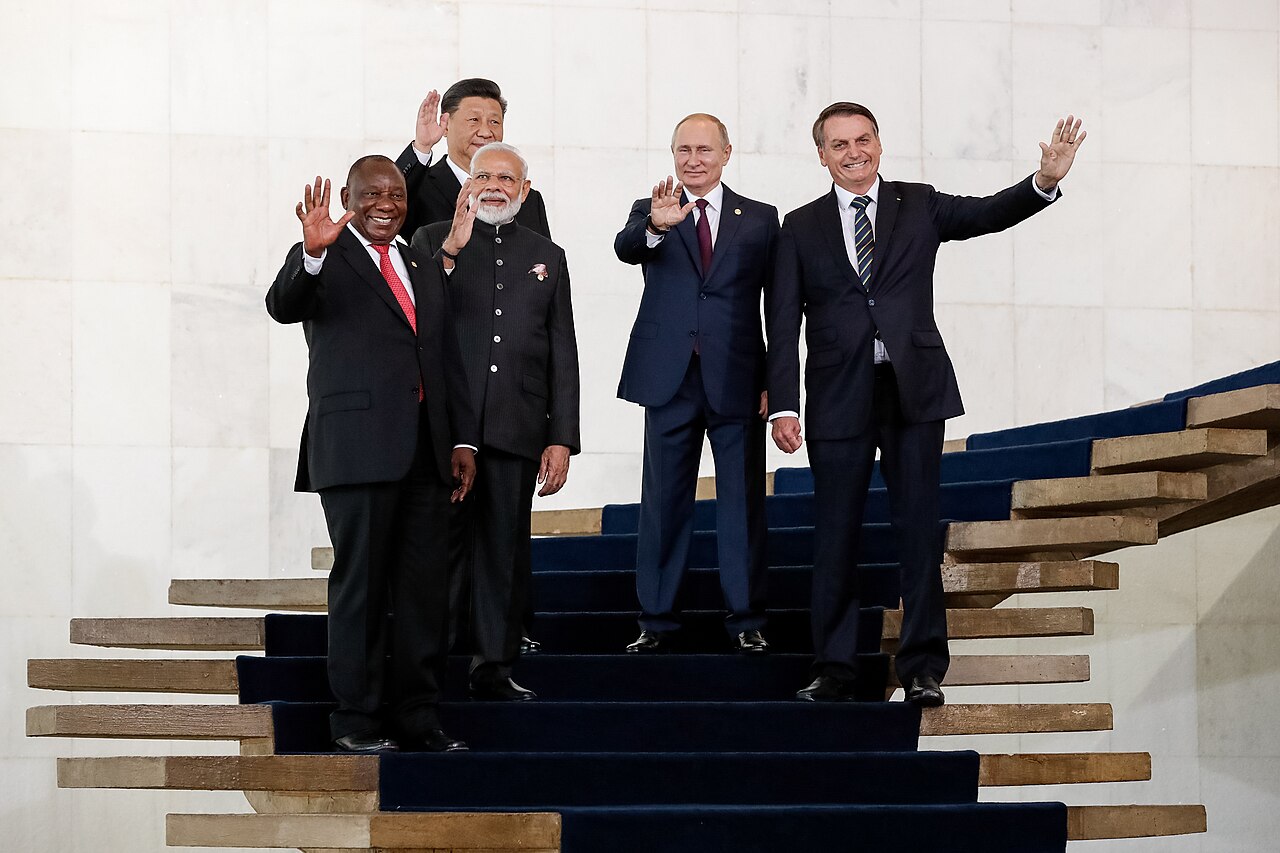
The BRICS summit family photo from New Delhi places Xi Jinping, Vladimir Putin, Narendra Modi, Masoud Pezeshkian and a broad group of Asian and African leaders in one frame. It is designed to communicate scale, confidence and an expanding Global South. It is also easy to misread.
Not every person in a summit photograph represents a full BRICS member. According to the official participant information and Reuters, the ten full members are Brazil, Russia, India, China, South Africa, Egypt, Ethiopia, Indonesia, Iran and the United Arab Emirates. Wider sessions include partner countries and invited leaders.
That explains appearances by figures from Malaysia, Vietnam, the Philippines, Kazakhstan and Burundi. Their presence demonstrates engagement, not automatic accession. Brazil was represented by Foreign Minister Mauro Vieira rather than President Luiz Inácio Lula da Silva, another reminder that a photo lineup does not perfectly map the institution.
The distinction matters because social-media captions often present every attendee as a new member and then calculate an inflated share of global population or economic output. Partnership can involve consultations, projects and access to meetings without equal voting status. Invitations may reflect the host country's diplomatic priorities.
The image nevertheless has political force. India brought together Russia and China while hosting Iran during a regional war. Indonesia, Egypt, Ethiopia and South Africa widened the visual story beyond the original five-country acronym. Western audiences see leaders whom sanctions and rivalry were expected to isolate standing at the center of a crowded international platform.
Putin uses the scene to support his claim that a new world order is forming. Xi presents BRICS as a vehicle for development and a larger Chinese diplomatic role. Modi can show strategic autonomy: India works with Washington and Europe while also leading a forum that resists Western dominance.
Iran gains perhaps the strongest symbolic benefit. President Pezeshkian is not photographed as an isolated wartime leader but as a member of a large group discussing trade, energy and diplomacy. The UAE's presence in the same organization demonstrates that geopolitical rivals can share institutions even while disagreeing sharply.
Critics call BRICS incoherent. India and China have a border dispute. Iran and the UAE occupy opposing positions in the Gulf conflict. Members have different political systems, currencies and relations with the United States. The declaration required careful language precisely because consensus is difficult.
Supporters say incoherence is partly the point. BRICS does not demand alliance-style discipline. It offers countries another forum, development finance and bargaining power without requiring them to choose a single camp. In a multipolar system, overlap can be more valuable than ideological unity.
The summit's substance must be separated from its choreography. The New Delhi Declaration addressed sanctions, Middle East restraint, Palestine, Lebanon, trade and institutional reform. Those texts reveal actual consensus. The photograph reveals the audience leaders want to reach.
Economic claims need the same caution. BRICS members collectively account for an enormous share of global output when measured by purchasing-power parity, population and commodities. Market exchange rates, per-capita income, financial depth and technology produce different comparisons. Saying BRICS has “overtaken the West” without naming the metric is marketing, not analysis.
The dollar remains dominant in reserves and global finance even as members expand national-currency settlement. Internal trade can reduce exposure to U.S. sanctions, but converting currencies, balancing trade and managing capital controls remain difficult. A family photo cannot create a common monetary system.
Nor does attendance mean alignment against the United States. The Philippines is a U.S. treaty ally; India is a Quad member; several Gulf and Southeast Asian states host or cooperate with American forces. Many leaders want options, not a new Cold War allegiance.
That may be the most important message. The photo is not evidence of a disciplined anti-Western bloc, but it is evidence that the West no longer controls the only prestigious diplomatic stages. Countries can appear in multiple family portraits and negotiate across them.
What to watch next
Watch the official membership language, partner-country projects, New Development Bank lending and whether national-currency initiatives move beyond announcements. Which invitees seek full membership, and which prefer flexibility? Do internal disputes block action, or does minimal consensus prove durable? The family photo is carefully staged—but is BRICS becoming a governing coalition, a bargaining club or simply the most visible portrait of a world that refuses to fit into two camps?