China’s “Trade Superweapon” Just Went Dark
China’s state-backed LOGINK shipping-data platform has lost partnerships, left an international association and apparently abandoned a major operations hub.
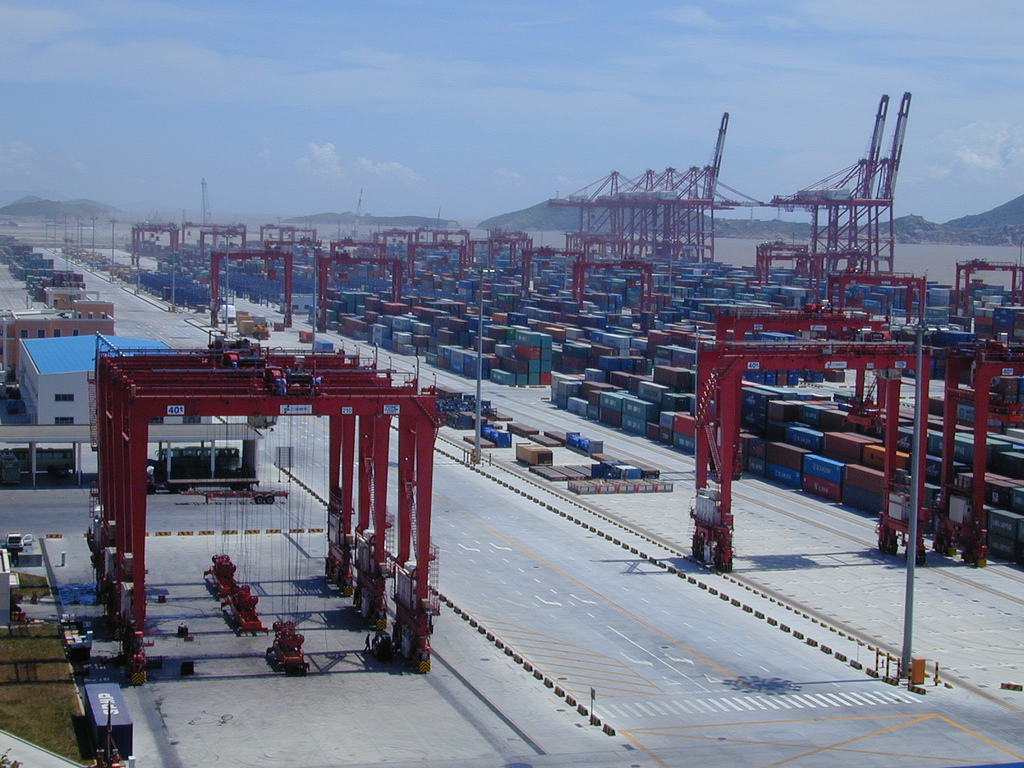
China’s LOGINK platform was once described in Washington as a potential “trade superweapon”—a state-backed system capable of seeing across the arteries of global commerce. Now its website is dark, international partnerships have stalled and a major operations hub appears abandoned.
A Reuters investigation based on more than 20 interviews and Chinese legal records found that LOGINK’s overseas expansion has sharply unraveled. The platform left the International Port Community Systems Association after it stopped paying dues, while an international data-sharing project associated with it is inactive. Reporters visiting the Wenzhou hub found the lights off, reception empty and computer cabling removed.
LOGINK was designed to replace fragmented paper and digital systems with a common logistics exchange linking ports, customs agencies and transport companies. That promise had obvious commercial value. Roughly 80% of global trade moves by sea, and better data can reduce delays, predict arrivals and lower costs.
The same visibility generated security fears. US officials argued that a Beijing-controlled platform could reveal cargo volumes, prices, bottlenecks and potentially sensitive military shipments moving through commercial networks. Congress prohibited the Pentagon from contracting with LOGINK-connected entities and directed officials to discourage allies from using it.
That pressure mattered. Lawmakers publicly warned ports and international associations that participation could give the Chinese Communist Party leverage over global trade. Japanese and South Korean authorities, however, said the information they shared was limited to vessel arrivals, departures and loading activity—not cargo contents.
China denied that LOGINK could continuously monitor global cargo or collect sensitive commercial information. Its transport ministry still called for connecting the system to more domestic data streams in a June policy paper, suggesting Beijing has not formally abandoned the concept.
US pressure is therefore only part of the story. Reuters also found unpaid-bill lawsuits and financial difficulties inside China. The platform’s retreat coincided with a wider economic slowdown and may reflect weak management, competing bureaucracies or a failure to build a sustainable business model. Investigators could not identify one definitive reason it went dark.
Washington will treat the collapse as proof that coordinated restrictions work. Yet the episode raises a broader problem: global shipping still needs interoperable data infrastructure. Blocking a Chinese platform does not create a trusted alternative automatically. Fragmented systems increase cost and leave ports dependent on private vendors with their own surveillance incentives.
Europe, Japan, South Korea and the United States could respond by developing open standards with clear rules on data minimization, audit access and government requests. If they do not, another platform—Chinese, American or commercial—will seek the same central position.
The “superweapon” label should also be treated critically. Data can create commercial and intelligence advantages, but no public evidence shows LOGINK actually used foreign port information to track a particular weapons shipment. Security policy often acts before proof of misuse because access itself creates vulnerability. That is defensible when safeguards are weak, but it should be described as risk prevention rather than exposure of a completed espionage operation.
The loss cuts both ways for shipping companies. They may avoid Chinese state access, yet they also lose a promised single window across many ports. The long-term winner will be whichever coalition offers efficiency without requiring governments and carriers to surrender opaque control over their most sensitive operational data.
There is also a competition over standards. A logistics platform becomes powerful not merely by owning servers but by defining the formats through which others exchange data. Once port authorities and carriers build their systems around one standard, switching becomes expensive. Washington feared that technical dependence could become political leverage even if the initial information looked mundane.
Any replacement should avoid recreating the same risk under a different flag. Commercial platforms based in the United States can also aggregate sensitive movements and respond to government demands. A credible alternative needs decentralized access controls, purpose limitation and enforceable deletion rules. The strategic lesson is not that Chinese data systems are uniquely dangerous; it is that global trade should not depend on a single opaque gatekeeper.
What to watch next
Watch whether LOGINK’s domestic network survives, whether Beijing funds a successor, and whether former partners migrate to Western systems. The platform’s international ambition has suffered a major defeat. Calling it permanently dead may be premature when China still considers logistics data a strategic asset.