Did Houthis Destroy Aramco—or the Bank Next Door?
Official accounts say an Aramco building was badly damaged, while satellite analysts place the destroyed structure at an adjacent bank complex.
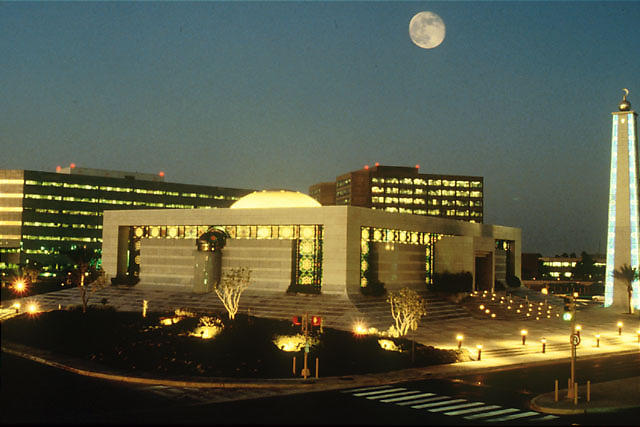
A ballistic missile obliterated part of a building beside Saudi Aramco’s Dhahran headquarters—but whose building was it? Saudi officials and major outlets say an Aramco administrative block containing the CEO’s office suffered extensive damage. Satellite analysts say the visibly destroyed structure belongs to the National Commercial Bank next door.
What happened
Reuters reported fire across several floors of the Aramco complex, partial roof collapse and employees told to work remotely, while operations continued normally. The Wall Street Journal said the affected building housed the CEO’s office and oil-supply planning functions. No casualties were reported.
Rerum Novarum, using Sentinel-2 imagery, mapped the destroyed structure south of Aramco coordinates and identified it as part of the neighboring bank headquarters. In Yemen, Houthis also struck near Aden’s Maashiq presidential palace, killing at least two and injuring others.
Why it matters
Large corporate campuses can contain leased, connected or administratively shared buildings that public maps label inconsistently. Low-resolution satellite imagery can confirm destruction without resolving ownership or internal use. Blast and fire may also damage more than the most visibly destroyed structure.
Houthi official Hezam al-Asad portrayed the campaign as reversal after years of Saudi attacks, language designed to present civilian and economic pressure as deserved submission.
The dispute matters because “CEO office destroyed” signals penetration of the symbolic heart of Saudi oil power, while “bank next door” indicates a damaging miss. Neither version makes the strike trivial: a ballistic missile reached a dense strategic district and destroyed a building.
The Aden attack reinforces the campaign’s reciprocal logic. Each side claims military necessity while government compounds, offices and nearby civilians absorb the risk. The war is moving deeper into administrative centers.
How to read the signal
The essential discipline in reading “Did Houthis Destroy Aramco—or the Bank Next Door?” is to separate the documented event from the larger story attached to it. A launch, deployment, court appearance, economic announcement or military image can be genuine while its cause, scale and strategic meaning remain disputed. Early certainty is often a warning sign rather than proof.
Incentives matter. Governments seek deterrence, reassurance and political advantage. Armed groups advertise reach while minimizing responsibility. Companies emphasize spectacle or commercial progress. Critics select the details that support a wider argument. The clearest account compares official statements with independent reporting, technical evidence and observable implementation.
Timing creates another source of error. Initial reports may contain incomplete casualty totals, confused locations or claims made before investigators reach the scene. Later imagery can identify a building, revise a number or show that old footage has been recycled. Responsible reporting remains updateable rather than freezing the first viral version into history.
The practical test is what happens next. Production schedules, trade flows, satellite images, court filings, flight notices, military movements and market prices reveal whether a headline marks a lasting change. Rhetoric can move public opinion immediately, but measurable conduct determines who gained leverage and who absorbed the cost.
A cautious conclusion is not an evasive one. It identifies what the evidence establishes, what remains an allegation and what would settle the dispute. That method allows serious risks to be discussed without converting a politically useful or visually dramatic claim into fact.
Readers should also resist false binaries. An official account can contain accurate facts and strategic omissions; a critic can identify a genuine problem while exaggerating its scale. Confidence should rise when independent evidence converges and fall when a claim depends on one anonymous source, cropped clip or unexplained image.
Verification and competing accounts
Saudi officials and Reuters/WSJ sources describe damage to an Aramco administrative building housing the CEO’s office. Rerum Novarum satellite analysis identifies a destroyed southern section of a neighboring bank headquarters. The apparent conflict may reflect adjacent damage or differing site boundaries and remains unresolved. Sources used for this report include Reuters, Wall Street Journal, Associated Press, Saudi Energy Ministry, Rerum Novarum satellite analysis. Claims from belligerents, anonymous officials and viral posts are attributed rather than converted into established fact. Figures and operational details may change as authorities release evidence or corrections.
Public satellite images cannot show who occupied specific floors. Anonymous-source reports can also misidentify buildings under wartime restrictions. This article does not declare either mapping conclusive and does not repeat “completely destroyed Aramco HQ” as fact.
What to watch next
Watch high-resolution commercial imagery, corporate filings, employee notices and ground photographs showing entrances or signage. A precise Saudi damage report could reconcile whether Aramco and the bank were both affected.