Interceptor Arithmetic: Why Gulf Air Defenses Can't Sustain a High-Tempo Drone and Missile War
The Gulf's layered defenses are powerful but finite. Sustained salvos can turn air defense into a munitions-math problem—where production timelines matter as much as technology.
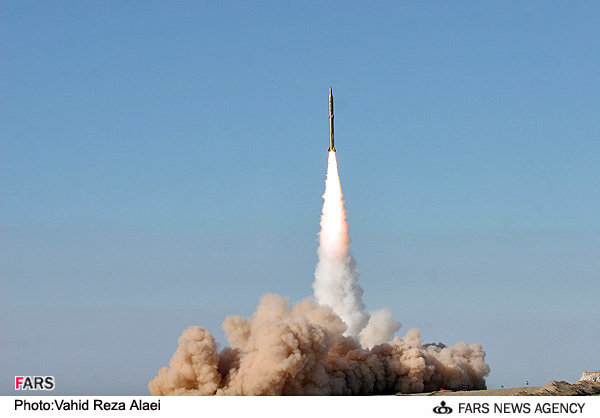
Air defense is often described in terms of systems—Patriot, THAAD, radars, command networks. In a prolonged war, it becomes something less glamorous: inventory management under fire.
The current Iran war has pushed Gulf states into an intense defensive posture, facing waves of drones and missiles across a wide geographic arc. Even when defenses perform well tactically, the strategic question is sustainability. Interceptors cost money, but more critically, they cost time—because replenishment is not instant, and production capacity is not designed for unlimited surge.
Recent reporting captures the underlying anxiety: U.S. and allied stockpiles of advanced interceptors are not bottomless, and high rates of consumption can outpace replacement. The core dynamic is asymmetric. Offensive drones can be relatively cheap and produced in volume; defensive interceptors are expensive, complex, and constrained by industrial throughput.
This is why "salvo strategy" matters. If an attacker fires mixed packages—drones to saturate, missiles to threaten high-value targets, decoys to trigger launches—the defender may be forced to spend scarce interceptors on low-cost threats. Over time, the defender's success rate can remain high but still be strategically undermined: not by a single breakthrough, but by depletion and fatigue.
The Gulf's defense challenge is worsened by geography and politics. Key infrastructure—refineries, LNG trains, desalination plants, air bases—must be protected because their loss has outsized economic and social consequences. That creates what strategists call "defense density" problems: too many critical targets, not enough interceptors, and a requirement to maintain coverage over weeks, not days.
There is also a coordination challenge. Gulf states do share early-warning and cooperate, but national systems are not fully unified. In a mass attack, decisions about engagement—who shoots, when, and with which interceptor—can be misaligned. The consequences are not only wasted missiles but the risk of friendly fire and airspace confusion, which has already appeared in regional reporting on incidents involving allied aircraft.
So what does sustainability look like in practice?
- Prioritization of targets becomes explicit. Not every drone can be engaged with top-tier missiles. More reliance shifts to point defense, electronic warfare, and cheaper interceptors.
- Rules of engagement tighten. Defenders accept more risk on peripheral threats to preserve inventory for high-consequence strikes.
- Industrial diplomacy intensifies. Gulf capitals push Washington and suppliers for accelerated deliveries—only to face the reality that production lines have lead times measured in months or years.
Public messaging often hides this arithmetic, because admitting it can invite further pressure. Yet the strategic signal is already clear to adversaries: long wars are won not only in the sky but in factories.
In this context, the phrase "empty in days" should be treated carefully; exact depletion timelines are not verifiable from open sources. What is verifiable is the direction: sustained attack tempo forces defenders to confront finite magazines, and finite magazines create strategic vulnerability.
For Gulf states, the immediate priority is survival and protection of core infrastructure. For the broader coalition, the priority is to prevent a defensive collapse that would make escalation almost automatic. Because once defenses thin out, the attacker's incentives change: what was harassment becomes an opportunity.
The war's air defense story, in other words, is not a single dramatic intercept. It is the slow tightening of a logistical noose.