Iran’s ‘500 ICBMs’ Threat Goes Viral: Real Deterrence, Bluff, or Wartime Psychological Shock?
A viral claim says Iran has prepared 500 ICBMs and could target Washington and New York if attacked. The warning is terrifying — but its credibility is deeply disputed.
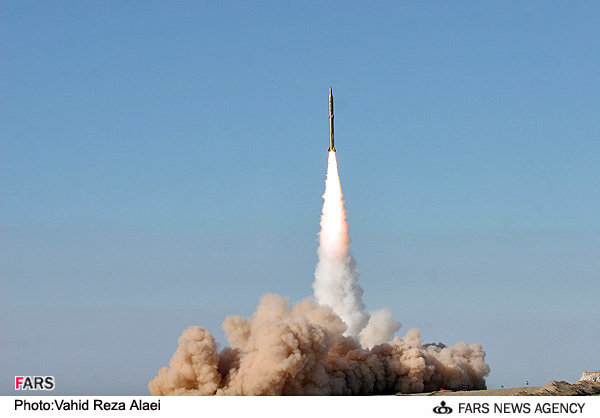
A dramatic claim has gone viral: Iran has allegedly prepared 500 intercontinental ballistic missiles and warned that if attacked, it could target U.S. territory, including Washington, D.C. and New York City. The line is terrifying, perfect for social media, and strategically designed to grab attention. But is it credible? That is where the analysis becomes more complicated.
Iran has one of the largest missile arsenals in the Middle East. Its ballistic missile program is central to its deterrence strategy and has been used to pressure Israel, U.S. bases, Gulf states, and regional adversaries. Iran's missile forces are real. Its engineering base is real. Its ability to produce short-range and medium-range ballistic missiles is not in doubt. The question is whether Iran possesses 500 operational intercontinental ballistic missiles capable of striking the continental United States. Public evidence for that claim is weak.
An ICBM is not simply a longer missile. It requires extreme range, guidance, re-entry technology, survivability, launch infrastructure, and operational reliability. A country can have many ballistic missiles without having a mature ICBM force. The United States, Russia, and China have long-established strategic missile programs with nuclear doctrine, launch systems, early-warning structures, and command-and-control networks. Iran has worked on space-launch and long-range technologies, but analysts have often debated how close those technologies are to a deployable ICBM. Claiming 500 ready missiles is therefore a major leap.
So why would such a claim appear now? Because deterrence is psychological as much as technical. In wartime, states and their supporters often exaggerate capability to shape enemy calculations. If Washington believes Iran could impose direct costs on U.S. cities, it may hesitate before escalating. If American voters believe a war in the Gulf could reach New York or Washington, domestic pressure on the White House may increase. Even if the claim is inflated, the fear it creates can have strategic value.
There are several possibilities. First, the claim could be propaganda designed for deterrence. Second, it could refer loosely to Iran's broader missile arsenal, mistakenly or intentionally labeling non-ICBMs as ICBMs. Third, it could be a misinterpretation of a threat by an Iranian-aligned figure. Fourth, it could be pure disinformation amplified by accounts seeking engagement. At this stage, readers should not treat the number or capability as confirmed.
That does not mean the threat should be ignored. Iran may not need ICBMs to impose serious costs. U.S. bases in the Gulf, Iraq, Syria, the Arabian Sea, and the wider region are far closer than the American mainland. Iran can also threaten shipping, energy infrastructure, cyber systems, partner states, and allied forces. Deterrence does not require hitting Washington if it can disrupt Hormuz, damage bases, raise oil prices, and trigger political panic.
For Israel, the viral claim adds another layer to an already intense missile war. Israel's defense system has been tested by Iranian salvos, Hezbollah threats, Houthi launches, and concerns about interceptor stockpiles. Whether or not Iran can hit New York, it can still shape Israeli security calculations through regional missile pressure.
For the United States, the danger is twofold. Overreacting to an unverified claim could escalate the conflict unnecessarily. Underreacting to Iran's real missile capability could also be dangerous. Good strategy requires separating fantasy from capability, and capability from intent. Does Iran have hundreds of missiles? Yes. Does it have regional strike capacity? Yes. Does public evidence prove 500 operational ICBMs aimed at U.S. cities? No.
The political effect may be the main point. A headline about Iran targeting Washington and New York travels faster than a technical missile assessment. It makes the war feel domestic to Americans. It changes the emotional geography of the conflict from the Gulf to the U.S. homeland. That alone may be enough for the claim's promoters.
The reader should ask a careful question: is this a real strategic warning, a deterrence bluff, or a psychological operation designed to make Americans imagine the war arriving at their own doorstep? In modern conflict, the answer may be partly all three.