Did Kuwait Just Fire Ballistic Missiles at Iran? The Viral Claim That Could Redraw the Entire Gulf War
A viral narrative says Kuwait became the first Gulf state to strike Iranian territory directly with ballistic missiles. If true, that would be a historic escalation. The problem is that the public evidence is still dangerously thin.
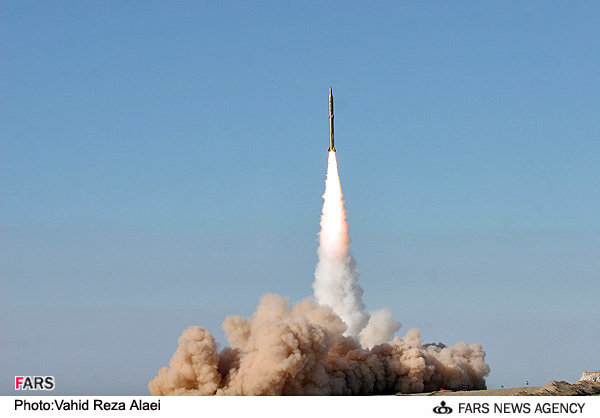
Some wartime rumors are absurd on their face. This one is dangerous precisely because it is plausible enough to scare people.
The claim racing across social media is stark: Kuwait has launched a ballistic missile barrage at Iranian territory, becoming the first Gulf state to strike Iran directly. If that were true, the strategic consequences would be enormous. It would mean the conflict had crossed from Iranian attacks on Gulf infrastructure into overt state-on-state military retaliation by a Gulf monarchy. It would raise immediate questions about U.S. coordination, GCC cohesion, Iranian retaliation doctrine, and whether the war had entered a genuinely new regional phase.
At the moment, however, there is no strong public reporting from Reuters or other top-tier wire services confirming that Kuwait has launched ballistic missiles into Iran. That absence does not settle the matter by itself. But in a development this significant, the evidentiary burden has to be high. Right now, it is not being met.
Why did the claim spread so fast? Because it sits on top of a real strategic tension. Kuwait has already been hit during this war. Iranian strikes and drone incursions have affected infrastructure and military-linked sites inside or near Kuwait. The country hosts foreign military assets, sits inside the wider Gulf defense architecture, and is exposed to exactly the kind of retaliatory logic Tehran has been threatening. In other words, there is a preexisting reason for people to believe Kuwait could be pulled across the threshold.
The problem is that “could be” and “has been” are radically different categories.
There are several possibilities. One is that the claim is false or exaggerated. Another is that an intercept event, launch from a foreign-operated base, or a misattributed air-defense response is being reframed online as a Kuwaiti missile attack. A third possibility is that confidential military activity occurred but remains intentionally unacknowledged. Until more verifiable evidence emerges, all three remain possible, and that uncertainty is exactly why the story matters.
The deeper issue is what such a claim does politically even before it is proven. If Iranians believe Kuwait has crossed the line, pressure rises inside Iran for direct retaliation. If Gulf audiences believe a member state has done so secretly, pressure rises for clarification or denial. If international markets believe it, oil risk premium moves higher because the war looks less containable. Rumor itself becomes strategic action.
There is a habit in online conflict discourse of treating unverified escalation claims as entertainment. But in the Gulf, false beliefs about who fired first are not just rhetorical noise. They can trigger real defensive postures, real evacuation decisions, and real retaliation planning.
That is why the most useful question is not “would Kuwait ever do this?” The better question is: under what circumstances would Kuwait feel compelled to do something that looked like it? If the answer is “only under extreme pressure, likely in concert with allies, and probably not in a way it would publicly own at first,” then the current rumor reflects a real fear even if the event itself remains unverified.
And that fear is this: that the Gulf states are slowly being dragged from reluctant hosts into active participants.
In previous weeks, Saudi Arabia and the UAE were already described in reporting and diplomatic leaks as privately resentful, publicly cautious, and strategically trapped. Kuwait has similar incentives. It wants protection without ownership of the war. It wants deterrence without becoming a primary combatant. It wants to survive the alliance without becoming the face of it. A direct ballistic strike on Iran would invert that whole balancing act overnight.
Which is why, if it had really happened, the silence around it would itself be a story.
So for now the responsible position is not certainty but disciplined skepticism. The claim is explosive. The consequences would be historic. The available proof is not yet strong enough.
In wars like this, people are tempted to ask only whether a story is true. But another question matters just as much: why are so many people ready to believe it immediately?
The answer may be that the Gulf is now living in a zone where the next impossible escalation keeps becoming possible.
That does not make this claim true. It makes it dangerous.