Norway’s Reporter Cornered India’s MEA: Why the Human Rights Question Refuses to Disappear
A tense exchange in Norway over India, press freedom and fundamental rights has gone viral. Was it Western hypocrisy, Indian defensiveness, or a legitimate democratic question?
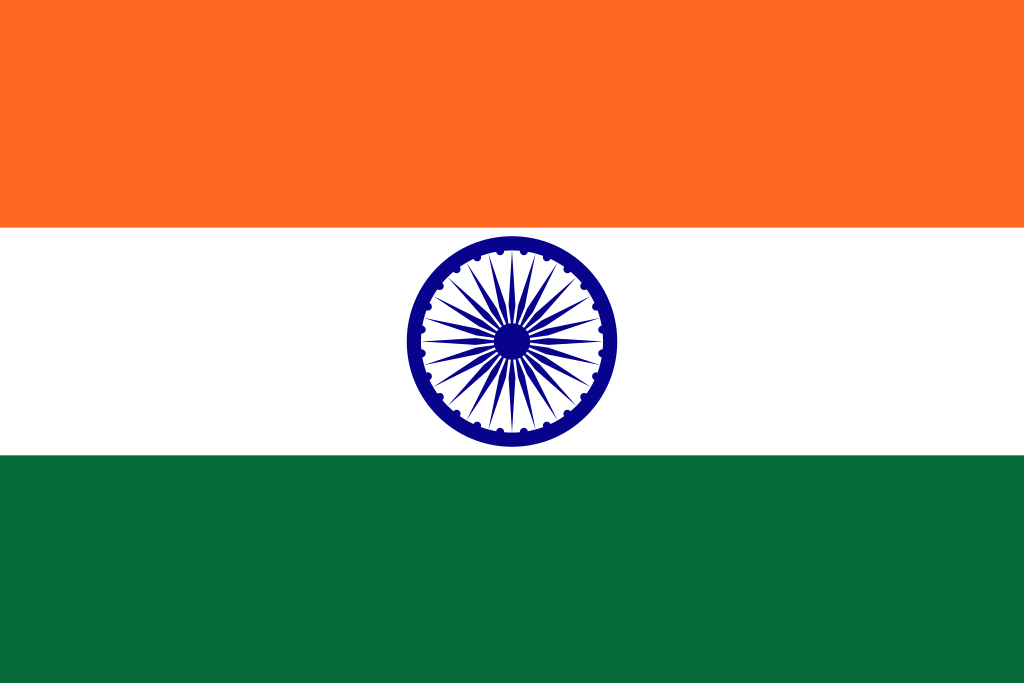
The viral Norway exchange about India’s fundamental rights is powerful because it shows a collision between two political languages. One language says: India is an ancient civilization, a constitutional democracy, a country with courts, elections and institutional remedies. The other language asks: if rights exist on paper, why are citizens, journalists and critics still forced to fight so hard to use them?
According to reports and clips circulating online, a Norwegian journalist pressed India’s Ministry of External Affairs representative during a media briefing on press freedom and human rights. The Indian side pushed back, arguing that many external perceptions of India are shaped by NGOs that do not understand the country’s scale and complexity. The journalist then pressed the obvious follow-up: if India guarantees fundamental rights, why are alleged violations still such a concern? When would Prime Minister Narendra Modi take more open questions from the press?
The exchange has been framed online as a knockout. That is too simple. India has a real argument against lazy foreign criticism. Western reporters and NGOs sometimes reduce India’s 1.4 billion people, hundreds of languages, regional governments, courts, elections and media ecosystems into a single authoritarian headline. India is not a small state that can be summarized in one index or one activist report. It is messy, loud, contradictory and decentralized.
But that defense has limits. Saying “we have a Constitution” does not answer every question about how rights work in practice. Many countries have constitutions. Many countries have courts. The test is not whether rights are written. The test is whether ordinary citizens, journalists, minorities, activists and political opponents can exercise those rights without unreasonable fear, cost or punishment.
The answer may depend on whom you ask. Supporters of the Indian government argue that criticism of India is exaggerated, selective and often politically motivated. They say India’s courts remain active, elections remain competitive, opposition parties still govern major states and the country’s media environment is not comparable to closed authoritarian systems. In this view, Western questions about Indian democracy often mask discomfort with a non-Western power that refuses to behave as a subordinate.
Critics respond that this is whataboutism. They argue that press pressure, legal harassment, internet shutdowns, minority tensions, sedition-style cases, tax raids and defamation actions can create a chilling effect even when formal democracy remains intact. You do not need to abolish elections to weaken liberal rights. You only need to make dissent expensive.
The most revealing line in the viral exchange was reportedly the question about people being forced to go to court for basic rights. That question applies far beyond India. In many democracies, rights technically exist but require money, lawyers, patience and social courage to defend. A right that only the rich can enforce is not meaningless, but it is unequal.
There is also a geopolitical layer. India is being courted by the West as a counterweight to China, by Russia as an old partner, by Gulf states as a labor and energy giant, and by the Global South as a civilizational power. This gives New Delhi room to reject moral lectures. But it also increases scrutiny. A country that wants global leadership cannot expect only investment, defense deals and diplomatic praise. Leadership attracts uncomfortable questions.
Western governments have their own hypocrisy problem. Norway, Europe and the United States all have issues with surveillance, protest policing, migration, speech restrictions, foreign wars and selective outrage. India’s defenders are right to notice that human-rights pressure is often geopolitical. But hypocrisy by the questioner does not automatically invalidate the question.
The debate should not be reduced to “India bad” or “foreign media biased.” The real issue is whether a rising democracy can accept hard questioning without treating it as national insult. Strong states do not need fragile press conferences. They can answer difficult questions because they are confident enough to separate criticism of government from hatred of country.
The open question is this: when India says its Constitution guarantees fundamental rights, will the world judge India by the text of that Constitution, or by the lived experience of people trying to use it?
The smartest reading is therefore not to cheer the journalist as a hero or dismiss the Indian official as evasive. The more useful lesson is procedural: democracies need public questioning precisely when they are powerful, popular or strategically important. A press conference is not a ritual of national praise. It is a stress test. When officials answer sharply, citizens should ask whether the answer clarified the issue or merely defended prestige.