Richard Werner Says the 1997 Asian Crisis Was Engineered: IMF Rescue or Financial Colonization?
Economist Richard Werner has reignited one of Asia’s most uncomfortable debates: was the 1997 crisis an unavoidable market collapse, or a managed opening for foreign control?
Richard Werner has put an explosive claim back into circulation: the 1997 Asian financial crisis, he argues, was not simply a market accident, but a crisis that powerful financial institutions helped engineer or worsen in order to force Asian economies to open their industries, banks and assets to foreign buyers. It is the kind of claim that sounds too dramatic for mainstream economics, but too historically uncomfortable to dismiss without examination.
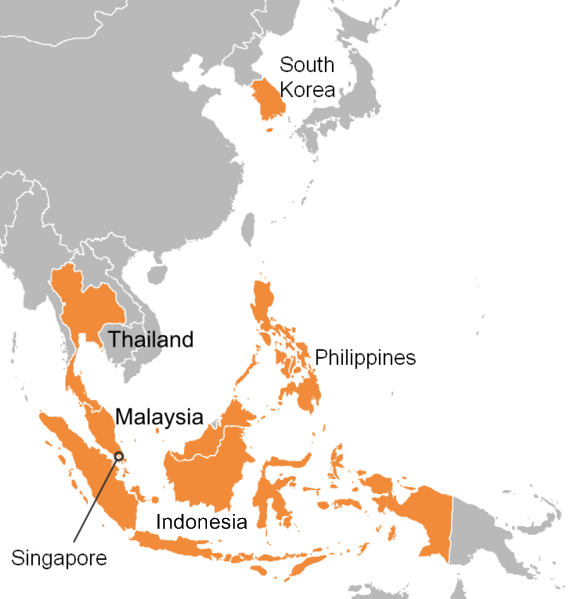
The standard account of the crisis is familiar. Thailand’s baht came under pressure after years of credit growth, real-estate speculation, weak financial supervision, dollar-denominated borrowing and loss of confidence. Once Thailand devalued in July 1997, panic spread to Indonesia, South Korea, Malaysia and beyond. The IMF stepped in with rescue packages tied to austerity, restructuring and liberalization. Supporters of the IMF view say the crisis reflected structural weaknesses that had to be corrected.
Werner’s interpretation is darker. He argues that Thailand and other Asian economies were not merely “rescued” by international institutions but pushed into policies that deepened the collapse. In this reading, the IMF’s conditions — high interest rates, fiscal tightening, bank closures and pressure to open assets to foreign capital — turned a currency crisis into a corporate and social disaster. Once asset prices collapsed, foreign investors could buy banks, factories, property and national champions at distressed prices.
The question is not whether foreign firms benefited. Many did. The question is intent. Did the IMF deliberately bankrupt Thailand to force a fire sale, or did it apply a flawed crisis-management template that unintentionally made the collapse worse? That distinction matters. One version is conspiracy by design. The other is institutional ideology producing the same outcome without needing a secret plan.
There is evidence for serious criticism of the IMF response. Many economists later argued that the austerity demanded in Asia was too severe, that interest-rate hikes crushed businesses already under stress, and that rapid financial liberalization before the crisis made countries more vulnerable to speculative capital flows. Malaysia, which imposed capital controls and rejected parts of the IMF orthodoxy, recovered in a way that still fuels debate. This does not prove engineering. It does prove the official rescue model deserves scrutiny.
The political consequences were enormous. Thailand’s crisis weakened domestic capital, increased foreign ownership, transformed banking regulation and reshaped national sovereignty. Indonesia’s collapse contributed to the fall of Suharto. South Korea accepted painful restructuring under IMF pressure. Across Asia, the crisis created a generational memory: Western finance arrived as a doctor, but many citizens felt it behaved like a buyer at an auction.
Werner’s strongest point is that money and credit are not neutral. If credit creation fuels a bubble and then credit is suddenly withdrawn, the result is not just “the market.” It is institutional power. Central banks, commercial banks, global lenders, rating agencies and multilateral institutions shape the conditions under which markets rise and fall. A crisis can therefore be “engineered” in a loose sense without a single villain signing a secret memo.
But readers should also be skeptical of total explanations. Asian governments made mistakes. Domestic banks took risks. Crony capitalism existed. Property bubbles were real. Corporate debt was dangerous. To say the IMF response was damaging is not the same as saying the entire crisis was created from outside. The truth may be more disturbing because it is less cinematic: local weaknesses, global speculation and ideological crisis management combined to produce a transfer of wealth and control.
The headline says the Asian financial crisis was engineered. The more useful question is: engineered by whom, in what sense, and for whose benefit? If a system predictably turns sovereign distress into foreign acquisition, maybe intent is not the only thing that matters. Maybe the system itself is the machine.