Are U.S. and Israeli Warplanes Refueling Over Saudi Arabia? Flight Tracks, Official Denials, and the Politics of Airspace
Open-source flight watchers say U.S. tankers are operating almost constantly over Saudi Arabia and supporting strikes linked to Israel's war with Iran. Saudi Arabia publicly denied in January that its airspace would be used for action against Iran. The visible tracks, the reported tanker damage at Prince Sultan, and the official silence now leave a politically explosive question hanging in the air.
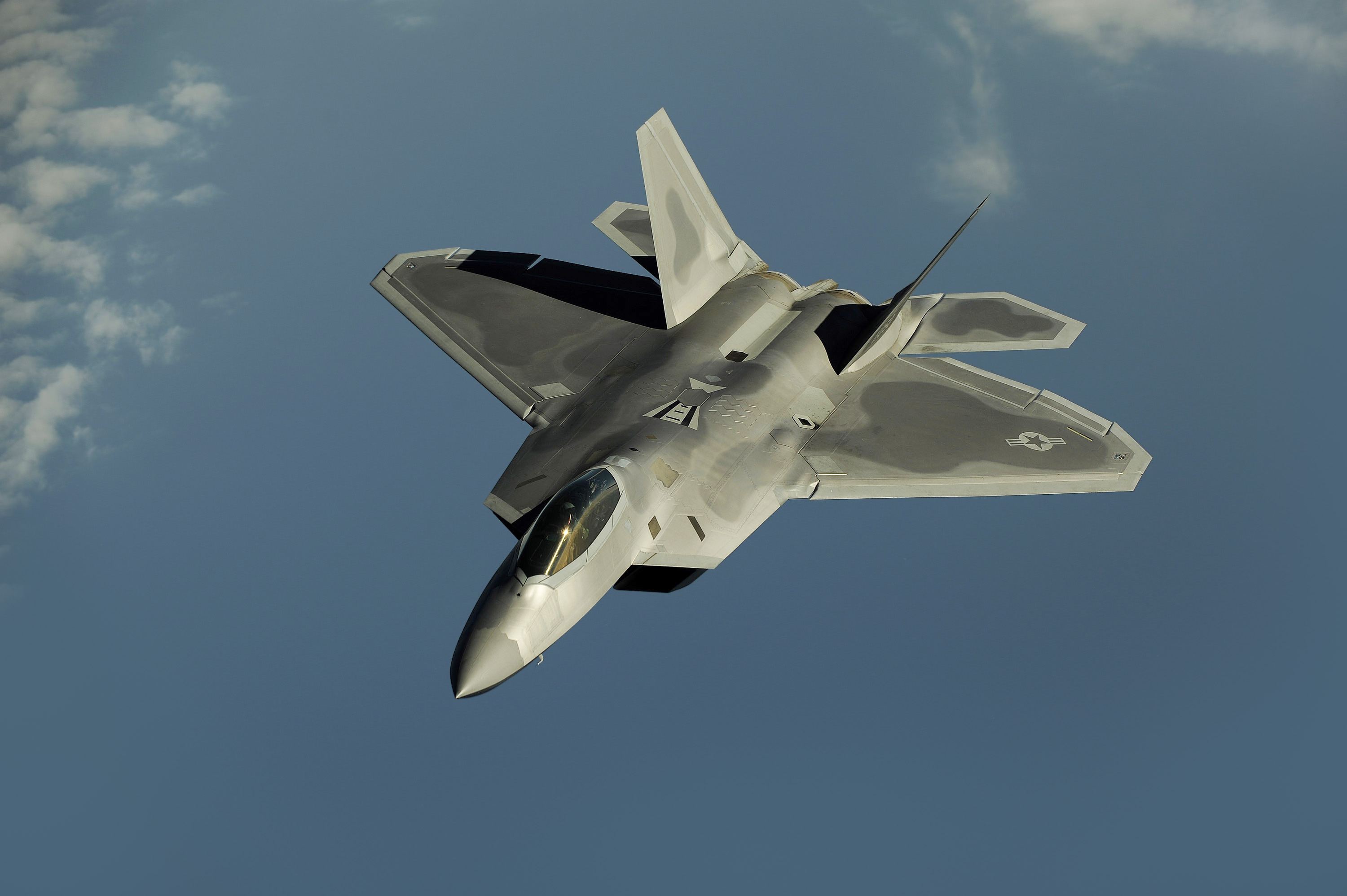
There are two wars in the sky over the Middle East. One is the physical war of tankers, fighters, missiles, surveillance planes, and strike packages. The other is the political war over who is helping whom, from where, and under what degree of plausible deniability. Saudi Arabia sits at the center of that second war. Officially, Riyadh said in January that it would not allow its airspace to be used for military action against Iran. Yet open-source observers have spent days pointing to near-constant U.S. tanker activity over Saudi territory and asking the obvious question: if refueling aircraft are orbiting there while U.S. and Israeli operations continue, what exactly is being denied?
The easiest answer is to dismiss the question as conspiratorial overreach. Tanker tracks alone do not prove the entire narrative now circulating online — that Saudi Arabia has handed over its “entire military air fleet,” or that U.S. aircraft are directly using Saudi-owned platforms for Israeli strikes. Those stronger claims go far beyond the public evidence. But the opposite mistake would be to pretend the visible pattern means nothing. Air war logistics matter. Refueling patterns matter. And airspace politics matter most when governments are trying hardest not to be seen taking sides.
Two Reuters reports help frame the issue. First, Reuters reported in January that Crown Prince Mohammed bin Salman told Iran’s president that Saudi Arabia would not allow its airspace to be used for military action against Iran. That statement was politically important because it signaled Saudi interest in preventing direct entanglement. Second, Reuters reported on March 13 that five U.S. Air Force refueling planes were struck and damaged on the ground at Prince Sultan Air Base in Saudi Arabia, citing a Wall Street Journal report based on U.S. officials. That second report changes the context dramatically. It shows that U.S. tanker operations linked to the war are not hypothetical abstractions floating somewhere outside Saudi strategic reality. They are physically connected to Saudi-based infrastructure important enough for Iran to hit.
This is where the distinction between “airspace use,” “base use,” and “operational support” becomes politically explosive. A government can deny allowing its sovereign airspace to be used for offensive transit in the narrow legal sense while still hosting allied assets, tolerating logistical operations, or providing forms of access that stop short of openly joining combat. Wartime diplomacy often lives in these half-lit categories. Public denials preserve domestic and regional politics. Quiet permissions preserve alliance utility.
The flight-tracking community, for its part, can see patterns but not always purposes. A KC-135 or KC-46 orbit over Saudi Arabia strongly suggests support for long-range operations. It does not reveal the exact receiver aircraft, target set, or diplomatic arrangement behind every mission. In some cases, refueling may support U.S. self-defense, surveillance, or regional posture rather than direct Israeli strike packages. In other cases, the overlap may be operationally obvious even if never admitted. The gap between what is visible and what is attributable is precisely the zone where modern coalition politics operates.
Iran has every incentive to collapse these distinctions. If Riyadh hosts, tolerates, or facilitates any element of the strike architecture, Tehran can argue that Saudi neutrality is performative. Saudi Arabia has every incentive to maintain the distinctions, because its rulers know the domestic and regional cost of appearing too visibly aligned in a direct war with Iran. Washington and Jerusalem benefit from the ambiguity as long as the operations continue.
That is why the reported damage to tankers at Prince Sultan matters so much. Even if Saudi leaders try to maintain a formal line of distance, Iran appears to be signaling that it will target capability, not rhetoric. From Tehran’s perspective, there is little strategic value in respecting the difference between declared neutrality and operational usefulness if the latter contributes to strikes or sustained aerial pressure.
There is also a broader structural point. Modern coalition warfare often depends on geography that cannot be publicly narrated in full. Tankers need orbits. Fighters need paths. Intelligence aircraft need safe corridors. Bases need resupply. States that want U.S. protection but not U.S.-Iran escalation become trapped in a contradiction: the infrastructure that makes protection possible can itself become evidence of participation.
Some analysts will argue that this is simply how alliances work and that Saudi Arabia cannot realistically enjoy U.S. defense commitments while insisting on perfect wartime cleanliness. That is true up to a point. Others will argue that allowing any quiet support while publicly disclaiming it invites the worst of both worlds: Iranian retaliation without domestic honesty. That criticism also has force.
What is clear is that the truth is probably neither the maximalist online claim nor the minimalist official denial. Publicly available evidence does not prove that Saudi Arabia has surrendered its entire military air capability to the United States or that every tanker over Saudi skies is directly fueling Israeli jets. But the combination of visible tanker patterns, known U.S. military presence, and reported damage to U.S. refueling aircraft on Saudi soil makes the political fiction of complete separation harder to sustain.
So are U.S. and Israeli warplanes effectively being supported from or over Saudi Arabia? In some operational sense, very likely yes, though the exact scope remains obscured. Is Saudi Arabia formally admitting that role? No. And it probably cannot do so without raising the domestic and regional price of the war.
That is the real story. Not whether one screenshot proves everything, but whether the air war has outgrown the language of neutral hosting. Once tankers are flying, missiles are landing, and denials remain frozen in earlier diplomatic wording, the sky itself starts to contradict the press release.
In the Middle East, that contradiction is often where the real coalition line begins.