Tripoli’s Youth Revolt Targets Dbeibeh: Genuine Anti-Corruption Uprising—or Libya’s Next Foreign-Backed Power Struggle?
Young protesters have blocked roads and government buildings in Tripoli as anger over blackouts, inflation and corruption turns into demands for Abdul Hamid Dbeibeh’s removal. External commentators are already using the unrest to promote rival Libyan power centres.
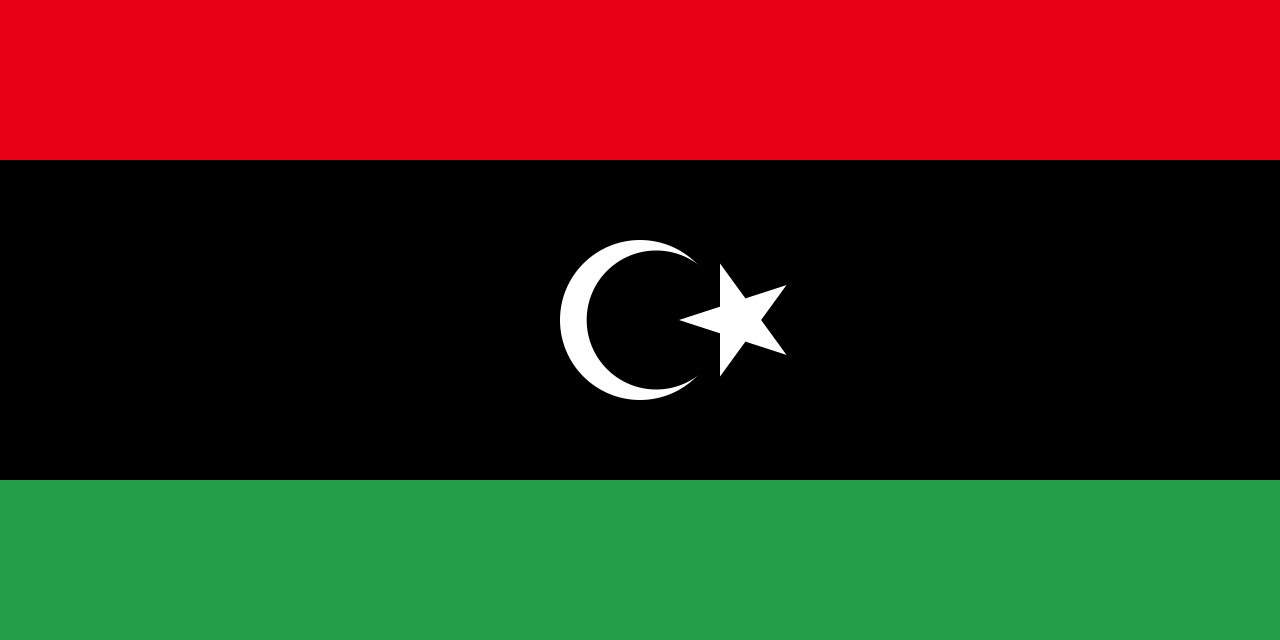
Anti-government protests have spread across western Libya as young demonstrators demand the removal of Prime Minister Abdul Hamid Dbeibeh and the dismantling of institutions they blame for corruption, blackouts and economic decline.
The strongest independently verified activity has occurred in Tripoli.
Protesters blocked major roads, burned tyres and placed barriers outside public institutions, including the Foreign Ministry and offices connected to state telecommunications.
The campaign is associated with the Souq al-Jumaa Movement, named after a major district of the capital. Organisers say their objective is to paralyse the government rather than attack private property or ordinary residents.
Reports also describe mobilisation in Misrata and nearby towns, although the scale and exact sequence of events outside Tripoli are less consistently documented.
The movement began with immediate grievances.
Residents have faced electricity cuts lasting many hours during extreme heat. Water supplies, healthcare, fuel access, inflation and cash shortages have intensified public anger.
Those complaints are not new.
Libya earns enormous oil revenue but struggles to deliver reliable services because institutions are divided, spending is opaque and armed groups influence state resources.
The protests have now moved beyond service demands.
Demonstrators are calling for the downfall of Dbeibeh’s Government of National Unity and, in some statements, the dissolution of the House of Representatives, State Council and Presidential Council as well.
That creates a political problem.
Removing one government does not automatically produce a legitimate replacement. Libya has competing authorities, rival military forces and unresolved election rules.
Dbeibeh’s critics accuse him of remaining in power beyond the intended transitional period. His supporters say the eastern camp dominated by Khalifa Haftar cannot be allowed to take control through military pressure or foreign sponsorship.
Local armed-group leaders have reportedly appeared around some demonstrations.
Their presence can provide protection. It can also transform a civic protest into a negotiation among militias.
Libya’s recent history shows how quickly youth mobilisation can be captured by established armed networks.
External commentary is already shaping the narrative.
Michael Rubin of the Middle East Forum published an explicitly anti-Dbeibeh article arguing that the Tripoli government and Libya’s grand mufti obstruct national unity. He portrays Haftar-controlled eastern Libya as a stable, nationalist and anti-Islamist alternative.
That is an argument, not neutral reporting.
Haftar’s administration controls large territory and major oil infrastructure. It has also been accused of repression, enforced disappearances, attacks on civilians and authoritarian rule.
Dbeibeh’s government faces credible corruption and governance criticism. That does not make the eastern model automatically democratic or unified.
Claims circulating online that Rubin was formally exposed as being “on the UAE payroll” require stronger documentary support than currently available in reliable reporting. His policy positions have often aligned with Emirati and anti-Islamist interests, but ideological alignment is not proof of secret payment.
The same caution should apply to statements attributed broadly to “the Jewish community.” Jewish Libyan organisations and individual activists do not represent one political voice. Their comments should be identified by organisation and evidence rather than treated as a single coordinated actor.
Foreign states have repeatedly backed competing Libyan factions.
Turkey supports western institutions and armed partners. Egypt, the UAE and Russia have supported Haftar. The United States and European states have shifted between mediation, counterterrorism and migration priorities.
Every domestic protest is therefore interpreted through a foreign-power map.
That can obscure the protesters themselves.
A resident facing ten-hour blackouts may oppose Dbeibeh without supporting Haftar, Turkey, the UAE or any ideological project. Young Libyans may reject the entire political class.
The movement’s credibility will depend on its methods and programme.
Can it remain nonviolent? Can it prevent armed factions from controlling decisions? Does it propose elections, constitutional rules and accountable institutions—or only removal?
Storming or blocking ministries creates pressure but can also disrupt diplomacy and public services. Entering oil facilities is particularly dangerous because petroleum revenue finances the entire state and remains a target for competing forces.
Dbeibeh must decide whether to negotiate, reform services or use security forces.
Repression could enlarge the movement. Concessions without structural change may only postpone the crisis.
The open question is whether the protests represent the beginning of a national civic movement capable of challenging every faction—or another episode in which genuine public anger becomes fuel for Libya’s existing struggle over oil, militias and foreign influence.