USS Gerald R. Ford Heads Home After 316 Days: What America’s Long Carrier Deployment Says About the Iran War
The USS Gerald R. Ford has entered the Atlantic and is heading home after one of the longest modern U.S. carrier deployments. The return is emotional — and strategically revealing.
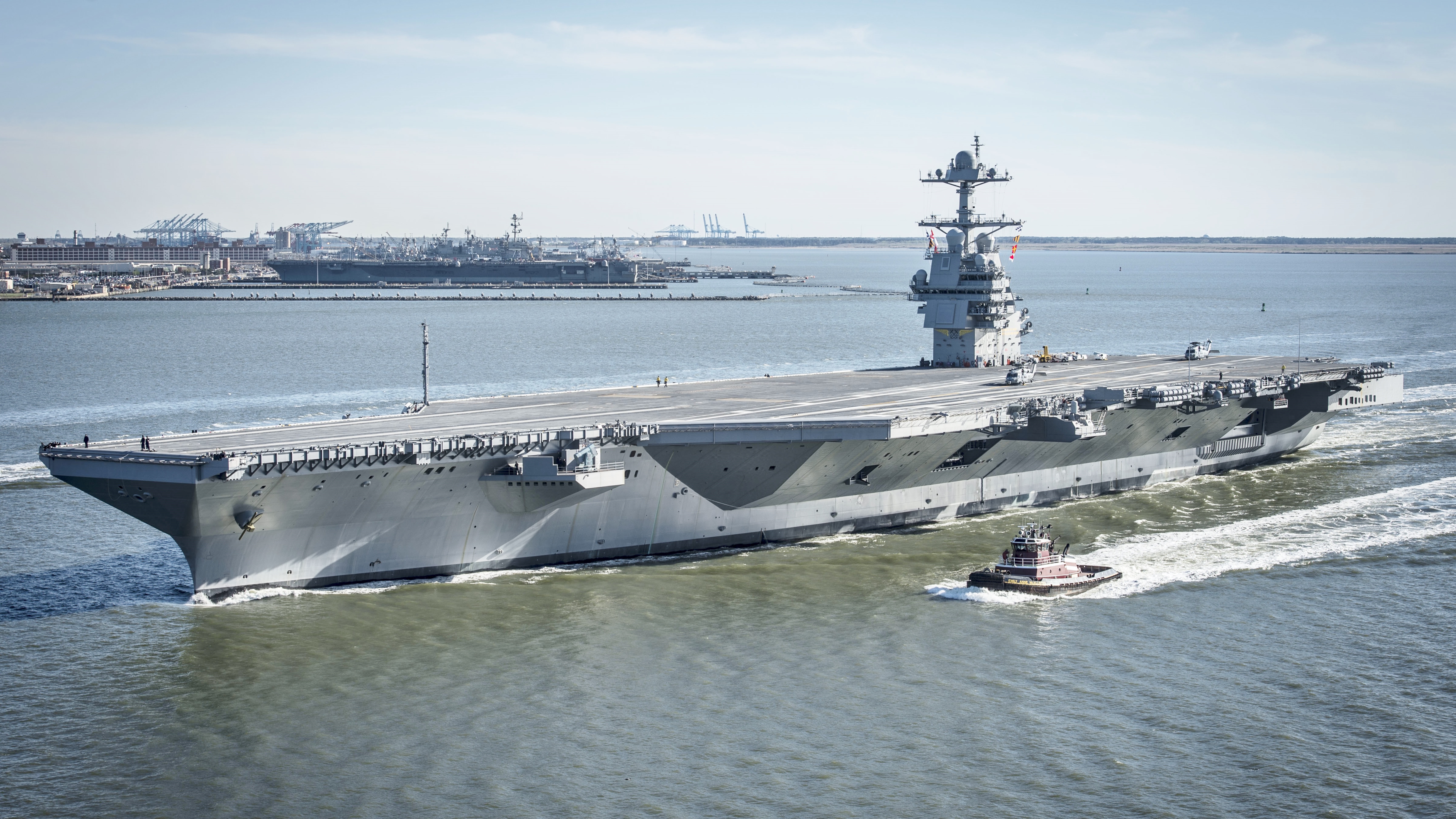
The USS Gerald R. Ford is heading home after a deployment so long it has become a symbol of the hidden human cost behind America’s global military posture. Footage and ship-tracking reports show the carrier moving west through the Strait of Gibraltar into the Atlantic after roughly 316 days away from the United States.
For families, that means reunion. For the Navy, it means reset. For strategists, it means something more uncomfortable: modern crisis management is stretching carrier deployments to lengths that look less like routine deterrence and more like permanent emergency duty.
The Ford is not just another ship. It is the lead vessel of America’s newest carrier class, a nuclear-powered platform designed to project airpower, support strike operations, deter adversaries and reassure allies. Its deployment through the Mediterranean and Middle East crisis environment placed it at the center of U.S. signaling during the Iran war, even when not every movement was publicly explained.
Aircraft carriers are political objects as much as military ones. When a carrier arrives, Washington is saying something. When it stays, Washington is saying something else. When it finally leaves after nearly a year, the question becomes whether the crisis has truly eased or whether another asset is taking its place out of public view.
The human factor matters. A 316-day deployment means sailors missing birthdays, births, funerals, school years, marriages and ordinary life. Military commentary often reduces carriers to tonnage, aircraft, missile defense and strike capacity. But the carrier is also a floating city of exhausted people. Long deployments are not cost-free. Maintenance backlogs grow. Readiness becomes uneven. Retention suffers. Families absorb the stress that strategy papers ignore.
The strategic factor is equally important. If the United States needs to keep carriers deployed for almost a year to manage crises from Ukraine to Iran to the Red Sea to the Indo-Pacific, then the fleet is being asked to do too much with too little margin. The carrier force remains unmatched, but unmatched does not mean unlimited. Every extra month at sea is a bill paid later in repairs, training time and crew fatigue.
Iran and China watch this closely. Adversaries do not need to sink a carrier to study how long it can stay deployed, how many escort ships it requires, how logistics flow, and how political leaders use carriers for reassurance. A carrier is a deterrent, but it is also a signal of dependence. When Washington has to keep one nearby to calm markets or allies, that reveals the fragility of the system it protects.
The Ford’s return also comes at a moment when the future of naval warfare is being questioned. Cheap drones, long-range missiles, hypersonic weapons, unmanned vessels and anti-ship systems are changing the risk calculation around large platforms. Carriers still matter enormously, but their operating environment is becoming more contested, more expensive and more politically sensitive.
That does not mean the carrier era is over. It means the easy assumptions are over. The United States can still move extraordinary power across oceans. The question is whether doing so for almost a year at a time is sustainable as multiple regions heat up at once.
For the sailors aboard the Ford, the story is simple: they are finally coming home. For the Pentagon, it is a warning light. A fleet that can stay deployed for 316 days is powerful. A fleet that has to do so may be under pressure.
The welcome home will be emotional.
The after-action review should be ruthless.