Iran’s Cluster Missiles vs Jordan’s Patriots: Is Amman Really Burning Through the World’s Interceptors?
Images from Iran's latest attack on Jordan appear consistent with cluster payloads, but claims that Patriots intercepted every submunition misunderstand how missile defense works—and exaggerate an undisclosed stockpile crisis.
Video from Iran's latest attack on Jordan shows multiple bright objects descending and detonating across the sky, prompting claims that Tehran used cluster warheads and that Jordan tried to intercept every submunition with Patriot missiles. One part may be technically plausible; the other is a viral joke being mistaken for operational analysis.
Jordan says Iran launched a major ballistic-missile barrage and that its defenses intercepted most of the incoming weapons. Reuters reported 18 of 20 missiles stopped, with no casualties announced. Iran says its attacks targeted U.S.-linked military facilities and penetrated regional defenses.
The footage circulating online appears consistent with a separating or cluster payload: a carrier releases multiple smaller objects over an area rather than delivering one unitary warhead. That can spread blast or fragmentation across aircraft parking areas, runways or troop concentrations. It also complicates public interpretation because defensive fragments, decoys and burning debris can produce similar visual patterns.
Technical confirmation requires recovered components, blast mapping and official identification. Viewers cannot reliably distinguish bomblets, interceptor debris and decoys from a night video alone. Until Jordan publishes forensic evidence, “clear use” should be described as a strong visual indication rather than a closed case.
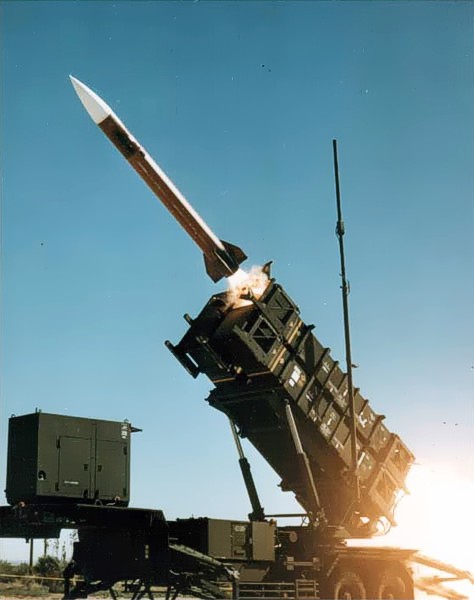
Patriot defenses are not designed to chase every bomblet after dispersal. Their preferred engagement is the ballistic missile or re-entry vehicle before it releases the payload. Destroying the carrier at altitude may prevent proper deployment, but fragments and unexploded submunitions can still fall. Once dozens of small objects separate, engaging each with a multimillion-dollar interceptor becomes unrealistic.
The sarcastic claim that Jordan decided to use the entire world's Patriot supply captures a real concern: magazine depth. A launcher holds a limited number of missiles, batteries need reloads, and production cannot instantly replace large volleys. Defenders may fire more than one interceptor at a threatening target to raise the probability of a kill.
Open estimates cited by the Center for Strategic and International Studies suggested Patriot and THAAD inventories were already under heavy pressure after months of Iran-war operations. Exact national stocks are classified. Any precise social-media total should therefore be treated cautiously, but the underlying imbalance is genuine: an attacker can combine cheaper drones, decoys and missiles to force expensive defensive decisions.
Cluster payloads sharpen that dilemma. A defender must decide which trajectory threatens a populated area or critical base, which may fall harmlessly, and when to conserve interceptors for later waves. Perfect defense is impossible. Political leaders often describe high interception percentages without explaining what was classified as threatening or how many interceptors were fired.
Cluster munitions also raise humanitarian concerns. Many states have joined the Convention on Cluster Munitions because bomblets can scatter widely and some fail to explode, leaving hazards for civilians. Iran, Jordan and the United States are not parties to that treaty, but customary rules of distinction and proportionality still apply. Using an area-effect weapon near civilians can be unlawful depending on target, accuracy and expected harm.
Tehran may choose such warheads for military effect and messaging. Striking a base parking area does not require hitting one building; spreading submunitions can damage aircraft, radar and support vehicles. Visually dramatic separation also creates the impression that defenses are overwhelmed even if the primary carrier was intercepted.
Jordan's challenge is political as well as technical. It says it is protecting its airspace, not joining America's war. Iran argues that Jordanian bases and defenses assist U.S. operations. Every successful interception may save lives while reinforcing Tehran's claim that Amman is an active participant.
The public needs more than percentages. Authorities should distinguish missiles launched, missiles assessed as threats, interceptors fired, leakers, debris impacts and unexploded submunitions. Without that breakdown, both triumphal and catastrophic claims remain impossible to audit.
Cost comparisons must avoid a simple “cheap missile versus expensive interceptor” meme. The relevant value is the damage prevented: one interceptor may protect a runway, fuel depot or crowded neighborhood worth far more. The attacker's advantage grows when defenders cannot discriminate real threats from decoys, not merely because the price printed on one missile is higher.
Civil-defense preparation is therefore part of missile defense. Shelters, warning systems, runway repair teams, dispersed aircraft and explosive-ordnance units reduce reliance on a perfect interception rate. A resilient base can absorb some impacts without losing its mission, changing Iran's calculation even when Patriots are scarce.
What to watch next
Watch explosive-ordnance warnings, fragment photographs, crater patterns and U.S. resupply flights. A confirmed cluster payload would signal a tactical shift and a new civilian-clearance burden. Can Jordan sustain defense through repeated salvos, or is Iran using dispersed payloads less to defeat each Patriot technically than to exhaust the inventory, complicate choices and widen political pressure?