Israel Is Running Low On Interceptors. Is Iran's Cluster-Munition Strategy Turning Air Defense Into A Losing Math Problem?
Semafor reports Israel warned Washington it is running critically low on missile interceptors, while Iran's use of cluster munitions may be accelerating the strain. Is this the moment when even world-class air defense collides with arithmetic, cost and saturation?
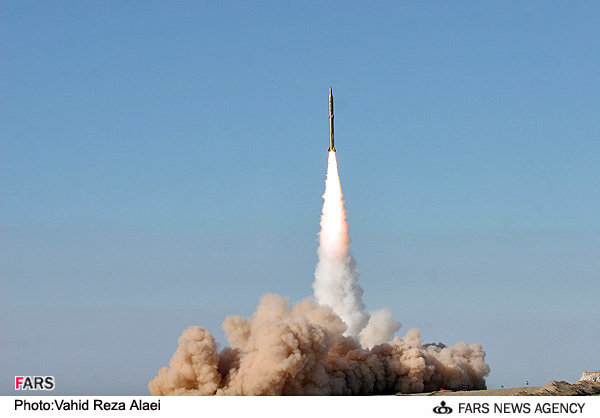
Missile defense is often sold politically as a shield. In practice, it is an argument with arithmetic.
That arithmetic may now be getting uglier. Semafor reported that Israel has warned the United States it is running critically low on missile interceptors, while additional reporting from CNN and AP has focused attention on Iran's reported use of cluster munitions, which complicate interception because one incoming missile can release multiple submunitions over a wide area. Times of Israel, while calling parts of the Semafor report unconfirmed, acknowledged the issue is being discussed seriously enough to matter. The broader point no longer looks fringe: even highly capable air defense systems can be strained if the attacker finds the right combination of volume, timing, cost asymmetry and payload design.
This matters well beyond Israel. The whole region is watching because every Gulf capital, every U.S. base and every military planner is now studying the same lesson. Air defense is not just about technology. It is about endurance.
Israel's multilayered defensive architecture remains among the most advanced in the world: Iron Dome for shorter-range threats, David's Sling for medium-range threats, Arrow systems for ballistic missiles, plus support from U.S. naval and regional assets. That architecture has intercepted vast numbers of incoming projectiles. But interception success and interceptor abundance are not the same thing. A system can perform well and still approach exhaustion.
The logic is simple. Interceptors are expensive, complex and finite. Attackers do not need to achieve full penetration to create strategic advantage. They need only to force the defender into a costly, exhausting cycle in which each incoming threat requires disproportionate expenditure of money, attention or readiness. If cluster munitions are indeed being used more frequently, that pressure intensifies because the engagement problem becomes less linear. One launch can create several objects, some lethal, some decoys, some residual unexploded hazards.
There are at least three ways to read the current shortage talk.
The first is the alarmist interpretation: that Israel's shield is cracking and a major breakthrough for Iran may be near. This is the most viral version, and probably the least careful. Running low does not mean running out. Strain does not mean collapse. Israel still has layered defenses, U.S. support, industrial replenishment pathways and a history of adapting under pressure.
The second interpretation is more measured. It says no defense system was designed for infinite duration under multi-front regional war conditions. In that reading, the shortage warning does not mean imminent failure. It means planners are trying to prevent a future problem by signaling urgency now. That is entirely plausible. Governments often leak scarcity in order to accelerate resupply.
The third interpretation is strategic rather than logistical. It says the real story is not the inventory count but the doctrine shift it reveals. If Iran is using wider-area payloads, mixed salvos and lower-cost attritional pressure to stress defenses, then the purpose is not merely to hit targets. It is to convert defense into depletion. The attack is aimed not only at cities but at stockpiles.
That third interpretation may be the most important.
Historically, missile defense was imagined as protection against a finite barrage or a high-value threat. But the Iran war is showing what happens when defense becomes a daily industrial contest. This is closer to the logic seen in Ukraine than in earlier Middle East crises: each side is learning from the other about how to saturate, conserve, improvise and reshape the economics of interception.
The political consequences are significant too. Israeli leaders have long argued that strong defense buys time for rational strategic choice. But if defense inventories begin to constrain strategy, then strategy starts serving logistics rather than the reverse. That changes everything. Decisions about escalation, retaliation timing and diplomatic windows can begin to depend not only on objectives but on warehouse realities.
Iran likely understands this. One of the most effective ways to erode deterrence is not to destroy the adversary's shield outright but to make the adversary fear that the shield cannot be sustained indefinitely. Once that doubt enters public discussion, civilian psychology changes. Markets change. Cabinet debates change. So does alliance behavior, because Washington must decide whether to surge resupply for Israel, retain munitions for its own forces, or husband interceptors for possible simultaneous contingencies elsewhere.
That last point deserves more attention than it gets. Interceptor shortages are not only national. They are alliance shortages. The U.S. is supporting Israel, protecting regional bases, defending Gulf partners and managing naval risks in the Red Sea and Hormuz. Industrial capacity is not magic. If multiple theaters consume high-end defensive munitions at once, scarcity in one place becomes a question for all of them.
Of course, Iranian use of cluster munitions is itself legally and morally contentious. AP noted that neither Iran, Israel nor the United States are party to the Convention on Cluster Munitions, even though over 120 countries are. That does not settle the moral issue. It highlights it. These weapons are controversial not only because of what they do on impact, but because they leave behind lingering risk. Even when intercepted imperfectly or dispersed, they can terrorize civilians, complicate cleanup and prolong fear after the immediate strike.
So what should readers conclude? Not that Israel is defenseless. Not that Iran has solved the war. And not that one report proves imminent systemic failure.
The more serious conclusion is narrower and more consequential: missile defense is now being tested as a long-duration economic system, not just as a technical shield. In that contest, the critical question is not whether a missile can be intercepted. It is how many nights in a row that answer can remain yes.
And that is a much harder question than the politics of air defense usually admit.